Featured

Analysis: Republic Pilot Training Proposal Deserves Thorough Hearing

By Kathryn B. Creedy

Editor’s Note: In an effort to independently determine the requirements of the of the Pilot Certification and Qualification Requirements for Air Carrier Operations and the Airline Safety & FAA Extension Act (Public Law No: 111-216 (08/01/2010) and whether the negative reactions to Republic’s proposal are justified, I reviewed the following:

Findings:

One final question: Does the law or regulation prevent the development of alternate pathways? No, in fact, they encourage it precisely because pilot training should be continuously improved based on new data and technology.

The opposition, by rejecting the Republic petition out of hand, is also rejecting all the aviation rulemaking and safety research and expertise that developed the rule.

Upsplash

Petition Shouldn’t Even Be Controversial

When unions opposed the Republic petition to the FAA to develop an alternative pathway for gaining a Restricted-ATP (R-ATP), it was clear they hadn’t read the petition.

In fact, thorough research reveals, perhaps, for the first time in history, we have a pathway that improves pilot quality, and, for that reason, the petition deserves thorough consideration by both FAA and legislators.

Common sense tells us a company would not invest $30 million to diminish safety or to produce poorer pilots. Common sense also tells us we should never be satisfied with yesterday’s training if adopting widely accepted techniques creates higher quality pilots. We know from ARC reports past training did not produce the quality of pilot we want, and regulations changed but should not stop there.

It’s been nearly a decade since those regulations and we should be demanding a review, given how technology has changed. We also know the loss of skills, discipline and professionalism while building hours seriously undermines safety, according to analysis by Flight Safety Foundation and the Pilot Source Studies. To its credit, the industry significantly increased training to counteract this deterioration but all these factors deserve independent consideration because it could become a template for higher-quality pilots.

Following the Law

To date conversations and solutions surrounding pilot qualifications have been limited to an arbitrary set of hours, the pilot shortage and training costs which is excruciatingly simplistic and counterproductive. Indeed, opposition has misled regulators, legislators and the public while forestalling genuine improvements pilot quality.

The petition was viewed through the lens of airline training experts and international safety authorities who have defined the widely accepted pathway to produce a high-quality pilot. Balancing that is safety experts who have no agenda aside from developing safer pilots including the National Transportation Safety Board, Flight Safety Foundation and training professionals extolling evidence/competency-based training for the Royal Aeronautical Society (RAeS).

The opposition charged Republic is trying to “circumvent the clear intent of the law.” That simply is not true. Their position rejects the already accepted logic of providing credits for university aviation programs and the military as well as the widely accepted belief that any changes to pilot training should be based on data.

This is no end-run as opposition suggests.

Republic’s petition capitalizes on the regulatory invitation for proposals to develop alternative pathways specifically designed to improve pilot training and develop safer, more qualified pilots.

In its rule, FAA noted “the importance of an aviation curriculum permitting a reduction of hours” as long as it incorporates “aviation coursework above and beyond what is required for pilot certification.” Indeed, Republic’s program is defined by what FAA and industry have already considered and accepted.

Republic’s petition also takes FAA at its word that developing a program going above and beyond pilot certification requirements is worthy of consideration.

The question then becomes is there a way to make better pilots. For the US military the answer is yes, it can train better pilots before giving them hundreds of millions of dollars in high-performance jets to fly. This is important because supervised training methodology of the US Air Force is granted 750 hours credit and is the genesis of Republic’s R-ATP petition when it was revealed by then Air Force Secretary Heather Wilson five years ago.

The First Officer Qualifications Aviation Rulemaking Committee Report researched the best pilot training and its recommendations outline the specific training requiring mastery before certificating a commercial airline, transport category pilot. It went so far as to identify the training that can be accomplished in a simulator/flight training device cautioning that its recommendations for non-aircraft training were in the interest of safety. This is important because ALPA has, astonishingly, rejected sim time in the past. Those recommendations became part of the rule and is incorporated in Republic’s 46-month training and, based on its petition, seems more stringent than what the military has done.

Regulators have already answered the question as to whether a closed-loop, highly structured, advanced training curriculum provides the same level of proficiency as traditional training.

The next question is whether a civilian, airline-specific, mission-driven version should be awarded credit similar the already approved military R-ATP pathway at 750 hours. Republic’s data indicates a higher level of proficiency than those trained in the military or outside of LIFT but that is for the FAA and other safety experts to validate.

But, and this is extremely important, any acceptance of credit hours must come with continuous, data-based analysis to ensure continued competency of a pilot once they join the line as Republic does.

Silly Argument

It is disingenuous of opposition to forward what I think is a silly argument – its insistence that since the law was imposed there have been no accidents – as the opposition does. That is also overly simplistic and ignores the complexity of the interlocking mechanisms that make up the aviation safety ecosystem. It suggests it was only increased hours that did the trick, not other causal factors such as industry-wide safety improvements including safety management systems and more reliable equipment and technology, according to Legal Adviser and JDA Journal Editor Sandy Murdock, who added any statistician will tell you correlation does not equal causation.

But, hey, I’m happy to use that argument to suggest this is a different industry since Colgan and old stereotypes no longer apply. It’s a great argument for suggesting the opposition’s view of the industry is outdated.

Opposition’s response to any pilot quality discussions to hours. For that reason, it is important to revisit this tedious, distracting subject.

I’ve often wondered why ALPA was so stingy on its requirements. Why 1500 hours? The union says experience makes better pilots, but the Colgan accident proved that wrong.

Murdock noted the captain had 3,379 hours of total flying time, including 3,051 hours in turbine airplanes, 1,030 hours as a pilot-in-command (PIC). The first officer had 2,244 hours of total flying time, including 774 hours in turbine airplanes. So, if ALPA wanted a better pilot based on the Colgan accident, why didn’t it choose 3500 hours or even 2500 hours?

The FAA’s and National Transportation Safety Board’s opposition to an arbitrary hourly requirement prompted my suspicion of the legislation and its actual intent which I detailed in a five-part Forbes series.

My suspicion grew because, despite the characterization that 1500-hours is desperately needed for safety, no other safety regulator rushed to copy the FAA. This is ironic since foreign carrier and regional pilots fly into US airspace without a question about their safety or anything to prove they are less safe such as accidents.

Suspicions prompted attendance at the World Airline Training Summit for years to find out what is needed in pilot training and competency. I happily returning to its halls this year where I realized that, while there is a lot of talk about improving training, progress is slow. We always seem to be on the cusp of adopting evidence/competency-based (EBT/CBT) training but never get there despite the fact it’s accepted around the world.  News flash, it’s not the hours, it is the quality of the training and the quality of the airline-oriented experience in time building.

Do Your Homework

The fact is pilots supporting the 1500 hours have not done their homework and know they are on shaky ground when it comes to debating. Indeed, they don’t debate at all.

Many mainline pilots and airline trainers tell me the key to increasing pilot quality is selection which today is little more than a credit card. In addition to stringent selection and testing, experts suggest constant data-based monitoring of the pilot throughout training and into operations is important to establish competency. Republic has both.

During 40 years covering the aviation industry, the entire industry turned to data analysis to successfully increase safety and is why experts are turning to data to judge the competency of trainees.

In rejecting this data paradigm, opposition wants us to rely on hours, saying any proposal to do otherwise is tampering with the 2010 law and consequent regulation requiring 1500 hours.

Research reveals the Republic Airways Restricted Air Transport Pilot (R-ATP) Program is very much in line with the ARCs’ recommendations, regulations and the general trend of aviation training professionals to move toward more data-driven evidence of not only pilot proficiency but competency. It also reveals there is near universal agreement on what it takes to make a safe, quality airline pilot. Republic’s petition details the many steps a candidate must accomplish during their R-ATP training which mirrors what is required in the pilot certification rule.

No One Suggesting Elimination of 1500-hour rule

It is well known that any discussion of eliminating the 1500-hour rule is a non-starter so the regional industry and Republic gave up on eliminating the 1500-hour rule. The Regional Airline Association stated that emphatically in numerous interviews and Republic Airways reiterated that during a media briefing, saying its proposal was not a reduction in the 1500-hour rule but works within the existing published 1500-hour rule alternatives. It merely wants credit for a highly structured training program for which the military is already receiving credit.

Nor did Republic develop its program in a vacuum. It conferred with both the military and FAA for feedback to improve its program. It also conferred with its pilots and its safety committee along with partners American, Delta and United, for which it flies.

The question is whether the FAA and legislators are serious about recognizing modernized training programs that improve safety, making way for new pathway programs to address the training gridlock we have today. Or, will the opposition continue to stand in the way of pilot training improvements.

Republic was gutsy enough to take the 2010 law and FAA at its word taking five years and $30 million to create LIFT Academy and gather the data necessary to prove its training delivers better pilots.

Changes Needed to Pilot Training

Mindless opposition suggests pilot training should be static and never change. No one believes that. Pilot training has come a long way in the last decade especially with new training technology and immediate data analysis and assessments improving pilot competency. The industry would be irresponsible if it didn’t insist on continuous changes, based on data analysis and safety, not on some gut feeling, politics and emotions.

Data from LIFT indicates a superior result, but it is up to safety experts and the FAA to validate its conclusions.

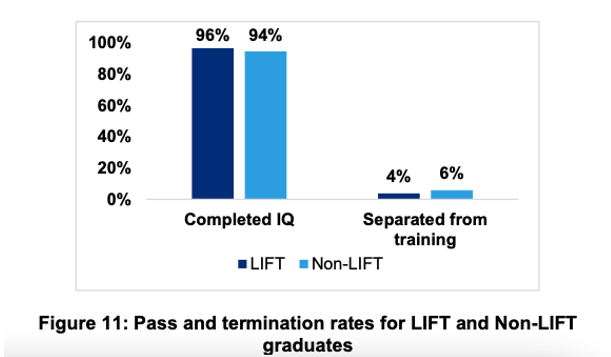
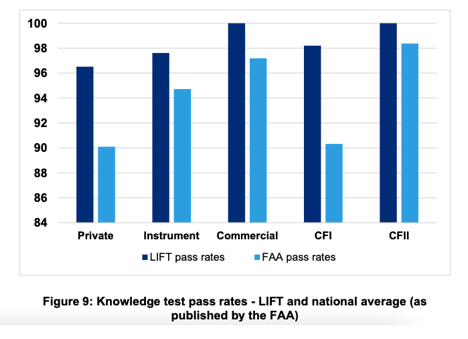
In its petition, it stated historical data suggests LIFT students going through Republic R-ATP meet or exceed the level of safety of the military R-ATP. Historical first time and total pass rates for LIFT students on DPE check rides are above the national average or well above the national average.

Source: Republic Airways Restricted Air Transport Pilot (R-ATP) Program

Using AQP line performance data, Republic also compared LIFT graduates with non-LIFT graduates with data showing they out-performed non-LIFT pilots. LIFT Academy graduates consistently exceeded safety standards in line performance, qualification and continuing qualification training.
Improving Training

Training experts want to see a regime based on data proving pilot competency is so good they will do the correct things in scenario-based training every time, not just during the check ride. The quality of a pilot should never be judged on one subjective pass-or-fail test because we’ve seen too many pilots passed along with disastrous results leading to accidents at American Eagle, Colgan, Continental and Atlas.

Indeed, that is why we have the Pilot Records Database, perhaps the most important aviation safety advance to come out of the 2009 Colgan accident. This despite the fact it took nearly three decades since it was first recommended by the NTSB and more than a decade since the 2010 legislation to be turned into an actual rule all while we’ve been arguing over how many hours it takes to make a pilot. It relies on data, but a robust process is, sadly, still in the making.

Training experts just want an objective measure of student performance rather than judging pilot quality solely on the subjectivity of an instructor. We need both. This is so important, according to the WATS speakers, that airlines are tapping aircraft data streams to determine whether what is being taught on the ground and in the simulator is happening in the skies. After determining it is not, they revise training programs using data in the spirit of Safety Management Systems continuous improvement philosophy. All that is going into developing better training programs for higher quality pilots and really makes debates about pilot shortages and time building silly.

“With the perspective of more than 70 years spent focused on aviation safety–related research, education and advocacy, Flight Safety Foundation believes that a pragmatic, data-driven approach to pilot training is essential to the continued improvement of the industry’s safety performance,” said the organization in its 2018 position paper. “The industry needs to embrace, and national civil aviation authorities need to have the flexibility to adopt, competency- or evidence-based training methods that target real-world risk and ensure a progressive and satisfactory performance standard. It cannot be assumed that critical skills and knowledge will be obtained only through hours in the air.”
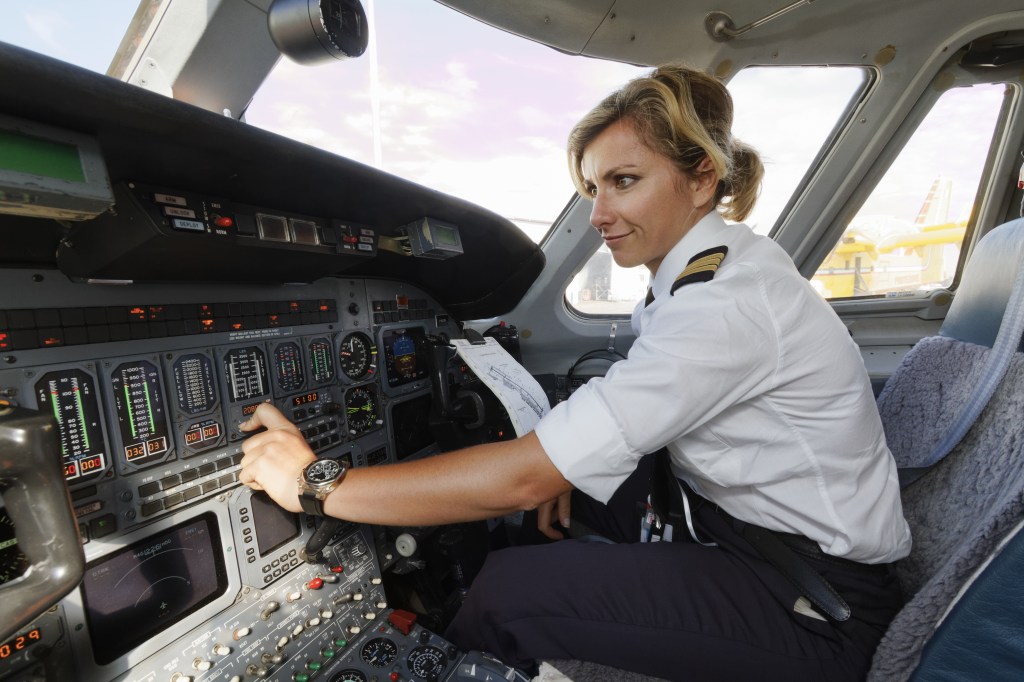
Shutterstock

In fact, Flight Safety Foundation indicated we are asking the wrong questions when it comes to pilot training. We should be asking whether what we are doing will achieve the levels of safety required to meet the growth demand. As thousands of flights are cancelled; as communities lose air service and as airlines scramble for schedule reliability, the clear answer is no.

FSF also asked whether we are using technology, data and experience to maximize training efficiency. Finally, it asked whether we can maintain a sustainable quantity and quality of pilots from our current approach. That answer is also no.

About Producing Better Pilots

Most conversations about pilots start and stop with whether or not there is a pilot shortage and I’ll admit I’ve been lured down that distracting rabbit hole. To be sure airports and airline revenues and growth are feeling the pinch on not having enough pilots, but I think that reducing the entire conversation to economics does a disservice to the serious topic at hand. Worse, the pressure put on pilots is prompting concerns about fatigue which may be compromising safety.

What matters to me is the efficiency and quality of airline pilot training and the blockade forestalling any meaningful aviation training reform, even if it produces better pilots.

While I’ll let the FAA decided on the value of the Republic petition, it seems an important opportunity to improve pilot training and create a boilerplate for other airline academies including those used by the major carriers.

The FAA should not dodge its responsibility because Republic has played by the rules and isn’t asking for anything that hasn’t been considered and granted before. To shirk its responsibility based on mindless opposition could keep us from improving pilot training.

What I can judge is the investment and work dedicated to this effort in solving a long-term, systemic problem is worthy of consideration. If you oppose Republic’s petition then I suggest you do your homework. I have.


Building a Strong K-to-Career Aviation/Aerospace Pipeline

The Power of Aviation Chapter Groups

Sign up for a free subscription

By Kathryn B. Creedy

Kathryn Creedy & Lynette Ashland Credit: Molly Martin

Few realize the power held by aviation’s chapter groups like the Association for Women in Aviation Maintenance or Women in Aviation International but even fewer of these groups work together to create what will solve the aviation/aerospace workforce shortage once and for all – an aviation/aerospace education ecosystem offering up the K-to-Career pipeline our industry wants but has no time to create.

Chapter groups are our force multiplier, an army of aviation and aerospace workers and enthusiasts in every corner of America.

Analysis: Youth Task Force Presents Daunting Challenges but Energizing Solutions

WIAAB Cites Culture as Driving Women from Aviation

Credit: shutterstock_1414418543.jpg

Another problem is the fact we’ve relied largely on volunteers which has been very effective but with the thousands of programs out there and the efforts of organizations to create pieces of the puzzle, they need to be organized so we can promote aviation/aerospace on a national basis.

Fair warning it will take a new pot of money to pay a professional staff to put it all together, but we think it is easier than the industry knows…if we check our egos at the door and work on behalf of the industry. The credit will be there as we direct people to your programs.

Much of what we need is already there including the blueprint for what is missing with the Youth Access to Aviation Jobs in America Task Force (YIATF) report, which, with the Women in Aviation Advisory Board report, continue to gather dust at the DOT. The National Coalition of Aviation and Space Educators aims to bring them to fruition. We cannot wait on government to act.

Credit: dose-media-DiTiYQx0mh4-unsplash.jpg

And we must ensure, this pot of money does not dilute the impact of the sponsors of our chapter groups and nonprofit STEM programs. Connecting the dots between educators, parents, students, teachers and corporate workforce development officials, should yield benefits for both with the rising tide.

Silos

Another problem is most groups operate in silos putting on and promoting their own events while participating only in each other’s major conferences. These chapter events are great at exciting kids but then what…an entire year goes by before the next one.

What if we were to participate in each other’s local events?

What if we were to show kids not only aviation careers and but take them by the hand and introduce them to their next steps?

What if we gathered the information on careers and scholarships as well as contact information for the local chapters of AWAM, Civil Air Patrol, EAA, Profession Women Controllers, The 99s, The Whirly Girls, Women in Corporate Aviation, Women at NASA, Women in Aerospace, WAI, NGPA, OBAP and Latino Professionals in Aerospace.  

Credit: Upsplash guilherme-stecanella-UrS5HkBr1Rc-unsplash.jpg

What if we worked together? Think of the possibilities.

Kids would not only see the professionals in their local area, but they would also get to know them and keep in touch with them as mentees. Chapter groups could use their mailing lists to send alerts about career fairs and other aviation events in their local ecosystem.

 If we were to do that, we would keep their attention in a very distracting world, expose them to all careers, not just our own, and provide them tours of local companies so they can see the careers we have in their own community. And companies could create relationships at an early age about what it takes to join their team.

And it’s not just about the kids. As AI disrupts the workforce and the economy results in layoffs, we need to let the parents know there are high paying, high value jobs out there that do not take a four-year degree. They need to know there is adult education and training that will get them there.

Industry Companies are Already Creating Great Programs

As I’ve covered our workforce shortages, I’ve watched as airlines, business aviation, chapter groups and aviation and aerospace manufacturers have created programs that build the pipeline.

Credit: Vuforia_Aerospace-007.jpg

RTX – Collins, Pratt & Whitney and Raytheon – created an aviation STEM program, teaming with the Boys & Girls Clubs of America. Duncan Aviation and West Star Aviation created AMT training and apprenticeship programs to feed their pipelines. Piper created its own training program, and, working with government workforce officials, is staffing its production line. Boeing has the Core Plus Program in Washington State schools. GE Aerospace is targeting colleges and universities.

RTX Launches Early STEM Education to Prepare the Future Aviation/Aerospace Workforce

On the Space Coast

Creating the K-to-Career Aviation/Aerospace Education Pipeline is what we do on the Space Coast of Florida, and what the National Coalition of Aviation and Space Educators (NCASE) is trying to build nationwide, by connecting dots between educators, community leaders, and corporate workforce development programs.

In our aviation/aerospace ecosystem are government economic and workforce development officials who have already identified aviation and aerospace as key economic drivers and who are looking for community partners to help them train and educate the future workforce. We also include all the local nonprofit STEM education groups from coding to robotics, drones, individual pilots and AMTs.

Our ecosystem also includes the public-school career and technical education offices, local colleges, AMT Schools and Flight Schools, aviation museums, FBOs and airports all coming to talk about their careers. We scour local businesses and find great tours to offer the kids – an event every other month like the tower tour we did at a local airport and an aviation museum, or the tour we did of Sheltair’s FBO to expose them to business aviation. Future events will include a tour of an aircraft manufacturer, an airport and an MRO.

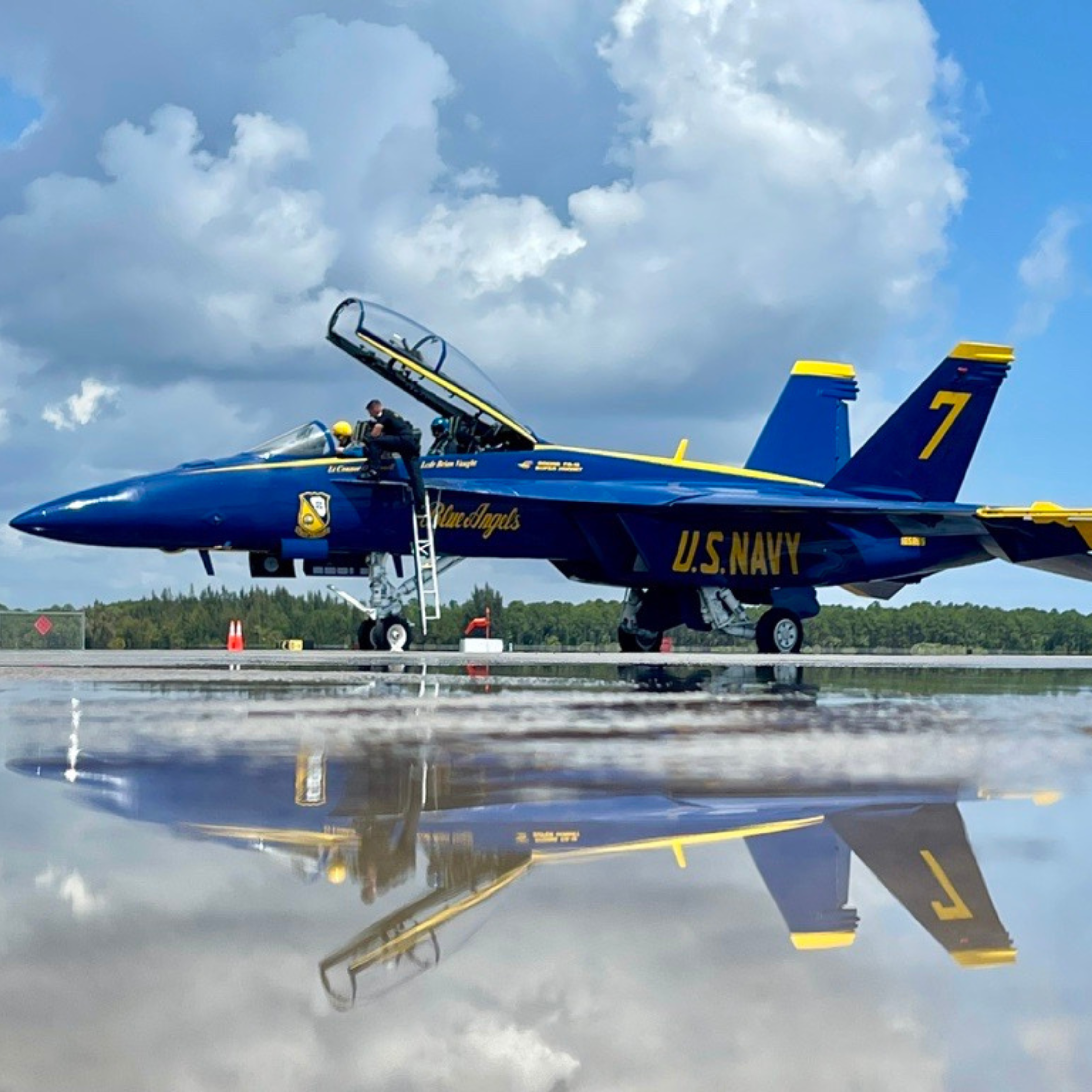
Credit: Blue Angels

If that sounds too much for an individual group, partner with other organizations to promote their activities. That’s why we need to work together.

The Space Coast Aviation/Aerospace Education Ecosystem was created organically by the Space Coast Women in Aviation Alliance, by going about our daily routine and meeting people who should be part of the ecosystem – government officials, STEM educators, CTE educators, professors, companies and attending aviation/aerospace career fairs. Those happy hours at the chapter groups are great at building the ecosystem! Just a few follow up emails, putting them on our list for alerts of both events and scholarships and calling on them to exhibit at the Girls in STEM Day or WAI-Harbor City’s GIAD. And promoting their events to our lists. They became our enthusiastic exhibitors.

Our ecosystem taps a national trend of families looking beyond college. They are responding to trade schools knowing they’ll have a guaranteed job at the end and no college debt. This trend has been underway since 2016, and aviation and aerospace haven’t really exploited it the way other industries have. The building trades unions pay for training!

When I talk to people, I advise going to trade school, getting their certificate right out of high school, joining the workforce and then using employee benefits to go to college or upskill and reskill.

We are Promoting Aviation, Aerospace Careers All Wrong

The Underrepresented Workforce Shortages

Source: Shutterstock

Our manufacturers have a workforce shortage problem greater than pilots or AMTs because without the workforce, the aviation and aerospace industry cannot grow. The economic cost is huge as Aeronautical Repair Station Association pointed out years ago in a survey of members. The results showed MROs were leaving $1.4 billion on the table for lack of workforce so manufacturing is a career we really promote. But they don’t get the ink pilots and AMTs do.

What our industry has never done is connect workforce development officials at our industry companies and the STEM educators. When we talk to company workforce development officials about their development efforts, it is all about filling the next post and poaching each other’s employees. That does nothing for the pipeline, and it is a K-to-Career Pipeline we need.

The ecosystem includes all the aviation alphabet soup groups who work in Washington and the National Coalition of Aviation and Space Educators is working to bring them under the tent. Remember they are chapter groups, too. Doing that will help us coordinate what they do – the American Rocketry Challenge, MRO Americas, the Aerospace Maintenance Competition, student days at NBAA conferences – with what the other legs of the stool do.

The model is the National Business Aviation Association which uses its annual conference to introduce kids to careers. The last day is a career track for high school and college kids. Equally important is NBAA’s regional network. It has very sophisticated regional chapters that host business aviation and professional development events. In our ecosystem is the Central Florida Business Aviation Association and we support its career fairs by broadcasting the information to our lists which includes professors and collegiate aviation chapter groups.

Credit: cassie-matias-Wc4WBReAMUw-unsplash.jpg

That’s what NCASE wants to do – have regional aviation/aerospace educaton conferences to make our industry more accessible to teachers, guidance counselors, students, parents, local government officials and the companies in our industry.

National Programs

Few know almost everything we need has already been invented with nationwide impact. Even decades-long veterans have no idea that all this is available and much of it is free.

Crew Concept Lab has Drone Soccer Teams, AOPA has its High School STEM Curriculum and Choose Aerospace in schools across the country. Numerous organizations – the Space Foundation and ERAU Gaetz Institute also have aviation-related STEM curricula. Many are free but schools don’t know about them. NASA has a website that includes having students get up close and personal with astronauts on the International Space Station. Talk about inspiration. For those without the AOPA/Choose Aerospace or ERAU curricula in their schools, EAA has its AeroEducate and pages for both parents and students.

Future Aviation/Aerospace Workforce News, my publication, has a list of aviation education resources and corporate workforce development programs. But there are thousands more needing to be added to that list. I also have an Aviation/Aerospace Calendar of Events and an article on how to use it the calendar to promote our careers. The resources are out there and mostly free, if we could just spread the word in our local communities. We also have a list of local organizations and resources we hand out at our Girls in STEM Day and WAI’s Girls in Aviation Day switching out the SCWAA logo for that of WAI. That way the kids have the information they need to take the next steps.

Checking Our Egos at the Door

As I’ve travelled around to different conferences discussing the effort, a lot of people are excited because they are invested in paying it forward as AWAM does and promoting our careers. They are looking for a way to have a greater impact.

Source: Xi Wang via Unsplash

More established groups and the aviation alphabet groups in Washington are more wary and rightly so. They’ve been trying to build the workforce for four decades and haven’t made much progress. But they have been relying on the federal government to solve our problems for us. While the feds have done a yeoman job with Congressionally mandated workforce development grants and FAA and NASA websites, it hasn’t done what is needed – a grass-roots-level effort bringing the entire ecosystem together in one giant effort.

Progress Is Being Made

Things are roiling up to the surface as the National Association of State Aviation Officials illustrated recently. It has teamed with its highway counterpart to develop an event website linking their careers to local events. It is in its infancy, but it will be great. But it illustrates that if you address one issue, the work is getting done. Those are the small victories industry workforce development leaders tell us we need to prove our credibility.

List your event here:

Survey Monkey: https://www.surveymonkey.com/r/VBLCN8R 

Pittsburgh International Airport, as it was planning its new terminal, reached out to both the building trades and community organizations to deliver training to bulk up the workforce building it. PIA is no longer and foreboding island but an integral part of the local community.

For PIT Workforce Development is Personal

Credit: Ed Miano

WAI, CAP, EAA and the Aircraft Modelers Association are teaming with both FAA and NASA to see what needs to happen to scale this whole effort. They are all integral parts of the aviation/aerospace education ecosystem. The question they ask is what’s next and how do we get there. We have the answer.

The National Hall of Fame is developing a website to represent our industry careers on top of its PBS children’s programming — Learning with Will and Orv – which it hopes to elevate nationally.

PBS, NAHF Offer Unique Aviation Education Opportunity

NAHF is excited about working with the entire industry to ensure the website is what we all need.

And the National Coalition of Aviation and Space Educators wants to bring it all together and actually promote the heck out of each and every one of these efforts.

A lot is happening, and we will need a lot of help, but we know a lot is already out there as well. It only needs organizing and promoting. Not just to industry officials but to parents and parenting magazines.

If you are interested in joining the effort, become a part of our aviation/aerospace education ecosystem by emailing me: kcreedy@kathrynbcreedy.com I’ll put you on my scholarship alert mailing list and NCASE will keep you posted as our efforts evolve.

Credit: American Rocketry Challenge

As we’ve spoken with industry officials, they tell us it is too big a task.

They protest that these plans are all well and good, but the need is now. Well, the need will always be “now,” if we don’t come together.

They say it can’t be done. Go for the small wins to build our credibility. And they could be right, but it is worth a try. I don’t think they realize all the resources and energy already there.

One of two things will happen. As we build this future we will find out it is happening organically in every corner of America and doesn’t need to be organized. It is happening organically, but NCASE believes it needs organization and promotion.

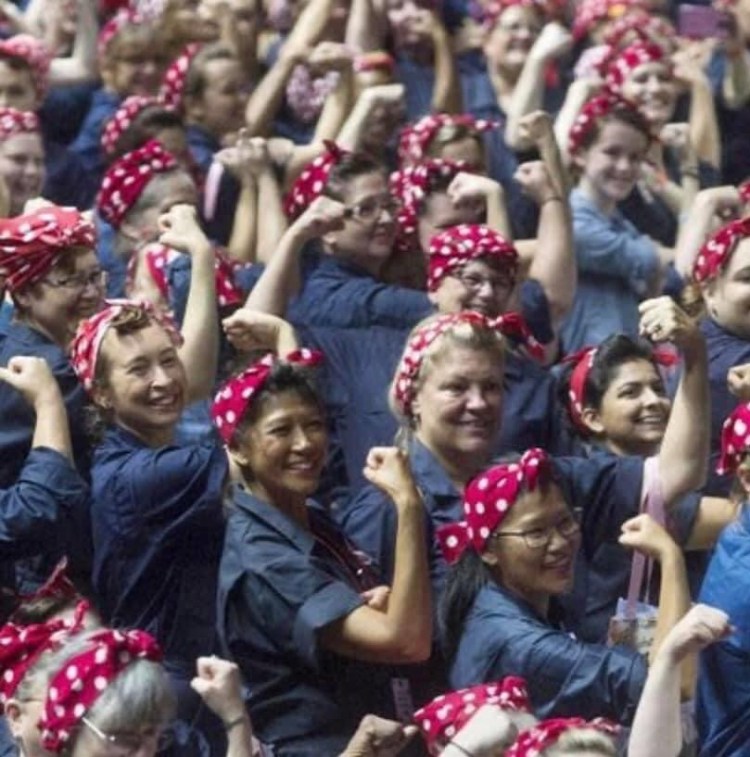
Why do I leave you with this picture? Because look was we accomplished when we worked together for a great cause. Yes we can. Women in aviation & aerospace are latter day Rosie the Riverters. Credit: The Detroit History Club

For now, when I hear their caution, I smile and think they have no idea the energy already being expended to create the workforce of the future. For that reason, I think it can be done and if we work together… Just watch us.

And, as I talk to contacts around the world, the idea is to go global.

Full coverage of the Inaugural AWAM Conference is here:

Rosie the Riveter Lives On

I Love the Smell of a Pregnant Woman in the Morning

A&P Value Goes Well Beyond Turning Wrenches

Know Your Rights, Know How the Compliance System Works

Analysis: Building An Equitable Workplace with the Help of Male Allies

I Love the Smell of a Pregnant Woman in the Morning

Sign up for a free subscription

An Analysis of the Aviation Culture and What to do About It

By Kathryn B. Creedy

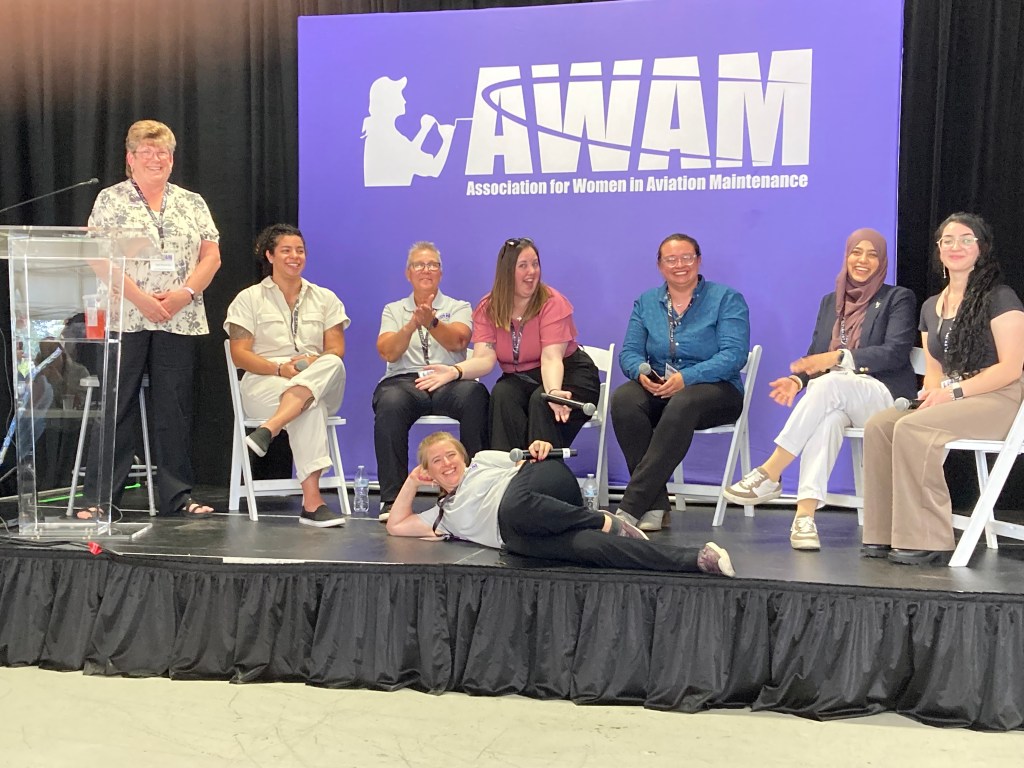
In what I believe is a first for any women in aviation conference, veteran AMTs reported some of the most cringeworthy moments they’ve experienced on the aviation maintenance line. From customers who refuse to work with women to how inappropriate remarks should be handled, the lessons learned did not just come from the actors on stage but reflected very impressive audience experience and advice on how to navigate these occasions. The role playing taught us what should be done to counter the current culture but also instilled in us the courage to make it happen.

AWAM President Stacey Rudser said she hadn’t checked with Guinnes but thinks the conference set a record of the number of women AMTs in one place at the same time. (Credit: Kathryn Creedy)

The message was clear. How companies support their workers is a serious litmus test, one companies cannot afford to fail given workforce shortages. For the women attending the Association for Women in Aviation Maintenance Conference last weekend, companies are now on notice. They may only be 2.8% of the AMT workforce but they are loaded for bear.

Taboo Topic

I’ve been interviewing women in aviation for decades for Aviation for Women magazine. However, these women played “good little girls” sliding past my questions on sexual harassment, assault and discrimination in the workforce. Instead, they rightfully spoke of their male mentors who pushed them into become more than a “wrench turner.”

From American Airlines Vice President for Maintenance Evie Garces to the veterans of the Chix Fix Team, they spoke with one voice.

“They saw in me what I did not see in myself,” said Garces of the managers that drove her forward. “There were a lot of men rooting for me.”

I’ve also been covering sexual harassment, assault and discrimination in the workforce for over a decade including a scathing editorial after this year’s Women in Aviation conference decrying the inclusion of Air Line Pilots Association President Captain Jason Ambrosi and the failure to link the male dominated workforce culture to safety. I have also written on how psychological safety is deeply tied to improving aviation safety, something WAI failed to grasp in its ally session earlier this year.

Opinion: Male Ally Discussion Very Disturbing with No Mention of Safety – Part One

Elevating Aviation Safety: The Critical Role of Bias Awareness and Psychological Safety

It is clear the latest generation of Rosies and their veteran counterparts are out to change the culture while older and more established organizations continue to shrink from the task for fear of alienating their sponsors. The audience at the Harassment – Real Stories session, were as savvy as the actors on stage. More importantly many showed they know how to handle themselves in awkward situations, peppering the session with actionable recommendations.

Are Members More Ready to Tackle the Culture Than the Associations Who Represent Them?

Many WAI members are pushing it to do more on culture but I also wrote a commentary about what we are risking if that backfires and sponsors abandon it. However, I don’t think it is risking much, by virtue of the fact sponsors need women and minorities to succeed – not just in staffing the workforce but in providing the diverse thinking that goes straight to the bottom line.

Just look at the numbers. Boeing’s 2025 Outlook report predicts a need for nearly 2.4 million new aviation professional over the next two decades including 710,000 maintenance technicians, to support the growing global commercial fleet and air travel demand. Boeing also cited the growing backorders and fleet demands as driving these workforce needs. Without us the industry cannot grow. Years ago, the Aeronautical Repair Station Association said the MRO industry was leaving $1.4 billion on the table for lack of workforce. Do you think the workforce shortage will be satisfied with just white men? That is laughable.

Memorize those numbers and use them. Remind supervisors that without us growth cannot happen.

Shouldn’t we be done with playing good little girls?

If this session revealed anything is that workers are ready for the cringeworthy and able to respond, which reflects a sophisticated, mature workforce with a confidence that even I didn’t know they had, especially given the changes wrought by the current administration.

I don’t think the organizations who represent women in aviation, aerospace and defense have fully internalized just how ready their members are. I don’t think they have the same courage reflected by the attendees and members at the AWAM conference.

Women’s organizations are not, as Board Member Angel Green said during the role playing, setting boundaries for the companies that serve our industry. Nor are they demanding the change called for at the AWAM conference which showed us that having these hard conversations can be done and should be an important part of any conference representing minorities and women because we are all dealing with the same culture.

Aviation Attorney Kathy Yodice (standing) is joined by L-R: Captain Jenny Beatty; Michele Halleran, director of diversity initiatives and Embry Riddle Aeronautical University and FedEx Captain Kandy Bernskoetter,.

WAI scheduled a sexual harassment session at the 2024 Orlando conference for one of the last sessions on the Saturday and I wondered at the time if that was purposeful. But, in reporting on it for Aviation for Women, I noted it was a packed house with a dozen women staying to discuss their experiences despite being one of the last sessions. Clearly, it was a popular, necessary conversation but it has not been repeated and it’s the first thing I look for when the program is released.

Harassment – The Real Stories

Board member Bill Russo, a specialist in tech ops training, played the bad guy in the scenarios but went out of his way to remind the audience he was just acting. In reality, he is well known as a long-time supporter of women in aviation maintenance and someone who helps them realize their potential. He was joined by board members Stacey Brown from FEAM and Angel Green from Tech Ops at UPS who reported that while she was pregnant, she walked by a coworker who said: “I love the smell of a pregnant woman in the morning.”

“We are using language that may offend people,” said Russo, cautioning attendees. “But it is important not to filter our language. These are real scenarios experienced by our board members and others.”

The Pilot Problem

Perhaps the biggest gripes AMTs have is when a pilot does not recognize them as mechanics and instead assumes they are from catering or a flight attendant and asks them to “send up maintenance.”

“Even female pilots do it,” one attendee said. “Usually, you get some type of attitude from the captain but just remind them they don’t move without the okay from maintenance.”

Green cautioned to be mindful of who is listening to the exchange especially if passengers are present. “You always want to stay professional and be respectful,” she said. “We are demanding respect, so you have to give it.”

Another reported a coworker always demanded a female mechanic make him a sandwich. “He was testing the waters to see what her boundaries were,” she said. “Set the boundaries with everyone within earshot.”

“Yeah, make him a dog food sandwich,” suggested Brown.

“I was even kicked out of the flightdeck because they didn’t believe I was a mechanic,” reported another attendee. “I just told him ‘fortunately you have the best mechanic on the team right here.’”

Another said she didn’t give people the opportunity to make that mistake. “I assert myself,” she said. “I introduce myself in a way that commands respect.”

Still a Man’s World

Brown indicated that aviation is still a man’s environment which doesn’t like women in the workforce.

“What we need to do is support our coworkers and friends and show we have their backs,” she said. “It is important to find a safe place at work. However, you respond, keep it professional. Ask why they said what they said. Tell them how it makes you feel uncomfortable and, if necessary, elevate the issue to the crew chief. Do not withdraw or avoid the person because that just signals there is no impact to what they have said and its breeds bad cultures with serious safety implications. It also affects your advancement and your opportunities to greater assignments that will provide new skills.”

For the customer who refuses to work with women calling them a distraction, Brown tries to reason and educate them. “You might want to consider her because she is a star mechanic who is loved by all the customers she works with,” she suggested, noting if supervisors and management don’t do that, they are signaling they don’t support their own team. “She’s also respected by her entire team which benefits from her experience.”

Or, in acquiescing, she continued, “you might say something like, ‘In the future you may want to consider her because there are now women in the workplace and they constitute some of our best mechanics,’” Brown added. “If that doesn’t work explain to the worker customer demands are not a reflection of their work or the team. But you also have to manage the customer relationships, and it may be that you want to tell them their attitude is unacceptable and the company doesn’t want to work with them.”

Russo added he often chooses team members strategically based on professional development. “I choose based on the opportunity an assignment would give them to gain new experience and round out their skills,” he said. “Leaders need to advocate for employees. The reason we are doing this role playing is because it is important to think about your response and to practice it because you get caught off guard and the tendency is to withdraw. Having a ready response is really powerful.”

Advice from Pilots

In fact, female pilots have made responding an art with Captain Jenny Beatty, one of the most powerful advocates against sexual harassment, assault and discrimination, offering up critical advice with her articles: Calm Comebacks to Rude Remarks, Halt Harassment in Aviation and 10 FAQs for the FAA Aeromedical Exam.

One of my favorite sessions during WAI is when Lane Wallace instructs us how to build bridges on the job. She explained my favorite nugget by describing an incident in which a team member says something insulting to a female coworker. Wallace indicated it is up to others present to call them on the behavior saying, “Hey, knock it off, you are hurting the team.” That takes the attack away from the women and puts it on the team and few want to go against the entire team.

We, too, had a speaker teaching us about building bridges in Dr. Linda Weiland from Embry Riddle Aeronautice University and that story can be found here.

Or, as another attendee suggested, “You may want to give them the silent death stare of a mother,” she said. “We all know the look our mothers have when we’ve disappointed them. That stare of disapproval goes a long way. The most effective response is to make someone really uncomfortable in a really pleasant way.”

Brown added: “The majority of guys have a mother, or sisters or daughters and responding to unacceptable comments by asking if they would speak to their mother or daughters that way makes them think,” she said. “It has an impact.”

Another attendee noted that culture plays a huge part in attracting talent and if a company is known for a bad culture which doesn’t support its workforce, that fact will spread faster than any recruiting campaign.

Terms of Endearment

The actors also covered dismissive nicknames – honey, sweetie or momma. Complaints are often met by the perpetrator telling them, “It’s a man’s world, get over it or you’re making a big deal out of nothing.” Standing back and saying it is a big deal and telling them you’ll report it to the supervisor is important, they said.

“Set your boundaries,” said Green. “Be forceful. Otherwise, you are letting them get away with saying your boundaries don’t matter. Be calm and direct. Repeat ‘What did I tell you over and over about calling me sweetie? Terms of endearment are reserved for my loved ones who are afforded the respect they deserve by such endearments. They are not for the workplace.’ Tell them that is a boundary you set.”

Attendees sported great t-shirts during the conference.

Another audience member noted they may think they are being subtle, but they are not. “They are trying to intimidate you,” she said. “This is a litmus test and that is why it is important to set the boundaries so every one of your colleagues knows what they are.”

“Everyone watching these events should know watching in silence is acceptance,” Brown added. “There’s always a third party listening so you may want to say, ‘we will talk about this later’ letting them know you are not done with what just happened.”

What about when a co-worker keeps making unwanted advancements despite all the refusals? “You don’t want to go with your boyfiend,” said Russo in his acting role. “Forget about him. I’m what you want.”

Report him was the advice of the group. “Just tell him you are done with talking to him,” said Brown. “Tell him you are going to the supervisor. And if the response is: ‘that’s just Bill, you’ll get over it,’ you’ll know this is not the culture for you and turn in your notice. Remember, supervisors have an obligation to deal with issues when someone escalates a problem. HR must deal with any violation that is documented.”

Proceed with Caution: Management Circles the Wagons Against You

The acting team also suggested bringing the issue to the legal team or a mentor, if HR or the supervisor does not respond appropriately or fails to launch a full investigation as required by the processes in place. But that can be dangerous since HR often retaliates against anyone who rocks the boat on harassment, discrimination or safety.

One of the members of the Delta HR team attending the the conference rose to urge participants to bring in HR before legal. “If HR doesn’t do full invetstigate, escalate to the legal team or to a mentor in the organization,” she said. “There is a clear process and way to report. Reporting can also be anonymous.”

“Make sure you document everything from the very beginning,” the team on stage advised. “Write down the date and time and what happened. That way you have a clear timeline of events, what was said, what you did about it and who was there. Connect with whoever is there to ask them to be a witness.”

All this is easier said than done. I have talked to many women who, with corporate policy against sexual harassment, assault and discrimination in hand, were not only rejected by HR but then retaliated against with marginalizing assignments and forcing employees into employee assistance programs they don’t need to intimidate them. This happens to both men and women. Retaliation is designed to make you leave. And the gaslighting they do starts with, ‘we’ve never had any complaint against this person so it must be you.’

Don’t believe it. Ask others who have dealt with the employee in question and build a case.

Similarly, if you are looking for support from your union, you may be surprised as they join management in the retaliation. Numerous pilots have reported that unions not only deny you support they are required to give but they use your dues to fight you.

Resources: Delta’s Debacle, a primer on how to protect your career, Calm Comebacks to Rude Remarks, 10 FAQs for the FAA Aeromedical Exam and Core Strengths by Lane Wallace.

One audience member noted she reported an incident of sexual harassment – “he locked me in the cargo compartment” – only to be suspended for complaining, and, at the end of her suspension, she handed in her notice. “They’ll ask why you are leaving and tell them you can’t work for a company that won’t stand up for you.”

Your AWAM Tribe

Several members noted that AWAM constitutes a considerable resource. “If the company is not looking out for you then turn to your colleagues at AWAM,” they said.

Russo seconded that suggestion saying, “Our mission statement is building a community of support around women and mentoring.”

Another attendee said her instructor always interrupted her to tell dumb blond jokes. “I elevated it to the president who said I was lying,” she said. “Social media is a real thing, and a bad review makes an impact. You don’t want anyone else to go through what you did.”

But be careful in using social media. Confer with your colleagues before pulling the trigger on a post. They’ll deliver strategic advice.

The audience was enthusiastic in their recommendations with one suggesting using SBI – Situation, Behavior and Impact. “You say either to the offender or the supervisor, ‘here’s the situation, this is the behavior I observed, and this is the impact it had on me.’ It’s just a very effective tool you may want to use.

Final Lessons

“We will never change the culture if you stay silent,” Russo concluded. “I’ve been a leader a long time and am proud to have built a reputation as an empathetic leader so my team trusts and respects me. The higher you go in leadership, the more important it is to temper what you say so as not to offend. What we say to people at work matters. Having this frame of mind makes us stronger as a team.”

Complete coverage of the Inaugural AWAM Conference is here:

Rosie the Riveter Lives On

A&P Value Goes Well Beyond Turning Wrenches

Analysis: Building An Equitable Workplace with the Help of Male Allies

Know Your Rights, Know How the Compliance System Works

Rosie the Riveter Lives On

Sign up for a free subscription

By Kathryn B. Creedy

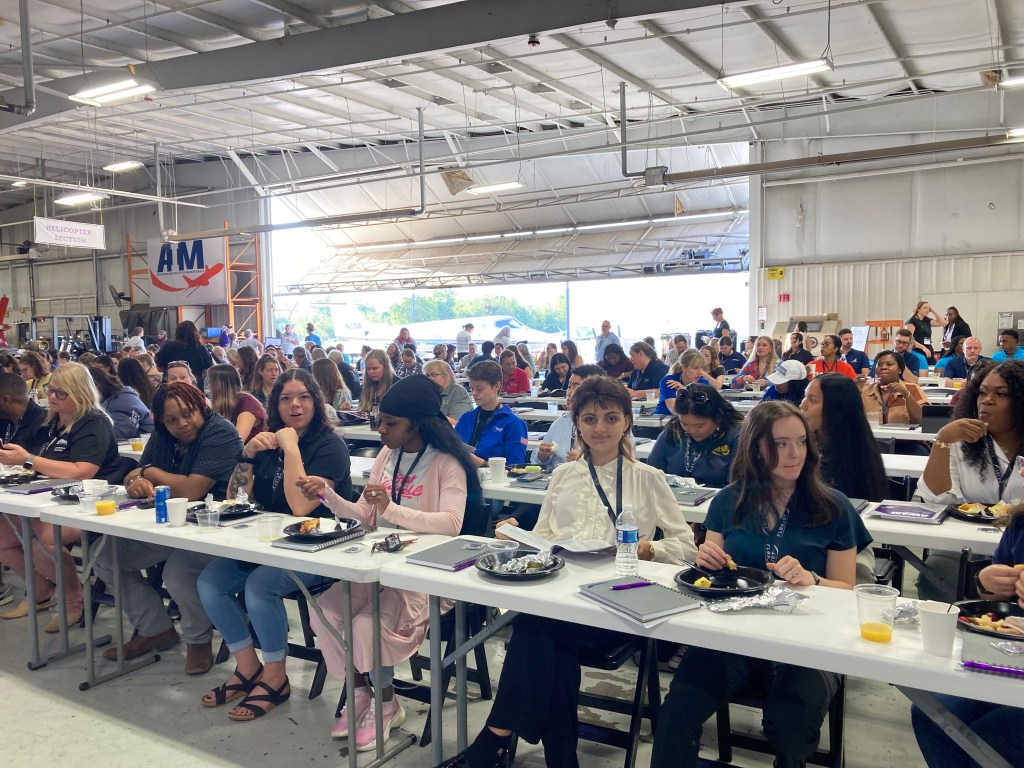
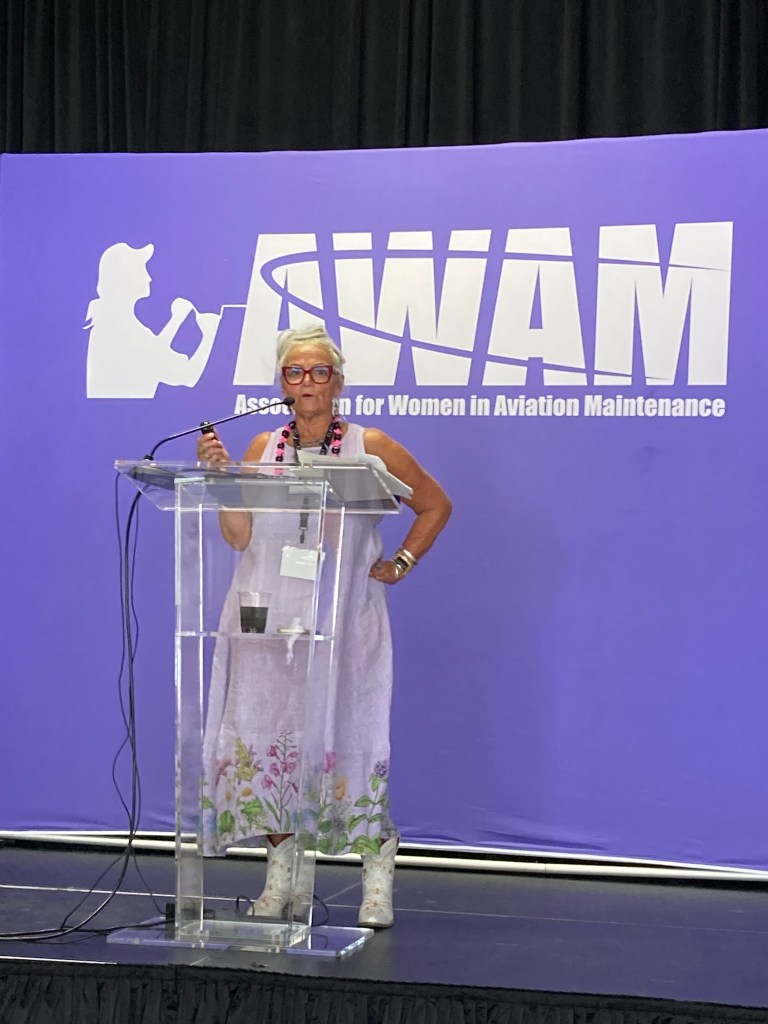
Rosie the Riveter remains alive and well and she spent last weekend in Dallas at the Inaugural Association for Women in Aviation Maintenance (AWAM) conference where 228 aviation maintenance technicians, students and instructors gathered in what can only be described as a history making event. Even so, the demand to attend was much higher, according to AWAM, which said it could have reached 250 if they didn’t have to cap it.

That may sound small in comparison with the thousands attending Women in Aviation International but, considering women AMTs only make up 2.89% of the AMT workforce, it takes on a much more significant role, especially for an inaugural conference.

Also impressive were the sponsors who were there to support AWAM with its inaugural conference. Sponsors which included: SkyWest, Republic, Delta, American Airlines, United, ATEC, US Aviation Academy, Sonic Tools, PSA Airlines, Piedmont, Flexjet, Aviation Institute of Maintenance, Aviation Workforce Solutions, NetJets, Endeavor Air, GoJet, Alaska Air Group – Hawaiian, Alaska and Horizon, JetPubs, VP Aviation and the Embraer Foundation. Many are powerful companies who are giving their stamp of approval on AWAM.

“Think about it,” said AWAM President Stacey Rudser. “I haven’t checked with Guinness, but I think we may have set a record of women AMTS all in one place.”

Indeed, leaders at the conference want to continuing doubling the number of women AMTs and A&Ps so, in the next 10 years, they constitute 50% of workforce.

Aviation Institute of Maintenance President Emeritus Joel English, hosted the Inaugural Association of Women in Aviation Conference at AIM-Dallas.

“We have half as many technicians as we need and we are ignoring half the population,” said Aviation Institute of Maintenance President Emeritus Joel English, who hosted the event in the AIM hangar. “We need to make women aware of the opportunities and we need to ensure they blossom in the profession. They are doing so already in front of our eyes. If we can continue to double, we’ll go from three to six% then to 12% then to 24% and before long you are at 48% and that’s half the workforce.”

The conference kicked off with a sneak peek at a documentary — featuring many of the attendees — called Airworthy which depicted not just the lives women lead as an aviation maintenance technician but how the career changed their lives and that of their families. It was a heartfelt salute to women in aviation maintenance.

“It has been my honor and privilege to share an industry sneak peek of AIRWORTHY with a room full of women mechanics at the AWAM conference in Dallas,” said Director Maria Peek. “I was deeply moved by the response from the very best critics imaginable-the women who ensure our planes are truly airworthy. Their encouragement affirmed the very heart of this story: that representation matters, and that courage can change the course of an industry and redefine what is possible for the next generation. We have submitted the film to several top festivals, and hope to premier it in just a few months.  I cannot wait to share this story with the public and see others dare to go after their dreams as a result.” 

And, if it gets into every school in the nation we will achieve that 50% that much faster!

We Can Do It

If there were ever a time when Rosie’s message – we can do it – gained new resolve it was during the AWAM meeting where students from aviation maintenance schools mingled with their college counterparts, newly minted A&P certificate holders and veteran mechanics who founded the organization in 1997.

“My colleagues are my strength,” Victoria Deveraux from American Airlines’s FACES employee empowerment group, told the gathering. “The main thing we talk about is troubleshooting. They come to my aid, and our aircraft are safer for it. I found a team who will celebrate with me in my highs and lift me up when I’m down. Know that you are more than a DEI statistic. We are the future and if we up and left, the entire industry would know our worth. It’s our responsibility to clear the runways. By our work, we show the next generation that no matter who they are or where they come from, they can do it.”

AWAM President Stacey Rudser and her band of intrepid volunteers pulled off what can only be described as a history-making event during the Inaugural Association of Women in Aviation Maintenance Conference in Dallas September 25-28, 2025.

That’s the power of having a tribe and the same can be said of AWAM and leading the charge was Rudser who, English noted, was AIM’s first female graduate, supported by AWAM’s founding members.

Then there was a graduate of Aviation High School in Queens, Evie Garces, who rose through the ranks at American to become Vice President of Line Maintenance, who never conceived of holding such an important operational post.

“I have 125 female technicians at American out of 10,000,” she told the opening reception. “I want to double that. It is no longer about being perfect. It’s about being intentional. We all have a role in inspiring women to become technicians. That’s how I perceive our mission. We need to pay it forward. I want my five-year-old to know she has choices.”

During the American Airlines sponsored reception at the CR Smith Museum, Garces recounted her career, her many doubts when offered management positions, the worries over work-life balance as she had her daughter, Sophie. They were all challenges filled with doubts but, in the end, she leaned in.

“I turned down some roles because it felt like I didn’t have a choice,” she said. “Do you think men have to make that choice? Why did I think I had to make a choice? In the end I just wanted to be the best I could, the best mechanic, the best supervisor. One thing I missed back then is you have to give back and that’s why I’m so active in encouraging more women in aviation maintenance. You have to see yourself in these roles and you have to see women in authority. We are here because of the great men beside us who have been our mentors, so you need sponsors to speak up for you when you are not at the table. Our responsibility is to make ourselves available.”

American Airlines Vice President of Line Maintenance Evie Garces (L) and Victoria Deveraux speak during the American Airlines sponsored reception at the CR Smith Museum during the AWAM Conference.

Deveraux said the job and the industry is not for everyone. “You have to work twice as hard as the men,” she said. “We are misunderstood and underrepresented but we do it with our heart, blood, tears and soul. We need to step out of our comfort zone and volunteer. We have turned a passion into a skill and our expertise into a career.”

Of aviation’s notorious culture, Veronica Leacock Borchardt who hails from United’s Calibrate program perhaps said it best. “We spent generations making strong women, but we didn’t prepare the men for those strong women.”

Navigation 101

Indeed, much of the conference was designed to help women not only navigate but change that culture. One of its most important sessions was role playing the cringeworthy moments experienced by veteran women AMTs and how to deal with them. That story is here.

Several veterans explained the reason for the session was to do what Women in Aviation International would not let them do, an important lesson for that organization given the intense audience interest. Members have been pushing for more frank discussions on sexual harassment during WAI, but it has only happened twice in its long history – during the Me-Too Movement and two years ago at Orlando. It has not been repeated. Indeed, that was one of the catalysts for AWAM developing its own conference.

“Each of our members come from difference experiences, have had different challenges and show different strengths,” said Rudser. “We started as a social organization with newsletters and seminars at WAI. We built our scholarship from its roots in 2002 to hundreds of thousands of dollars and hundreds of live impacted. We wanted the freedom to not need permission to talk about the hard stuff. Today we work with Aviation Technician Education Council in Washington on aviation maintenance issues at its annual flyin. We served on the Women in Aviation Advisory Board where we brought a unique perspective. That 2.89% is only certificate holders so we don’t know the actual numbers of women in aviation maintenance.

Source: Science in HD via Unsplash

“AWAM changed my life with a scholarship in 2013, and it invited me to WAI as part of that scholarship,” she continued. “Walking into an AWAM event is like a family reunion that I didn’t know I had. AWAM has not only helped me navigate my career but many of the veterans were mothers and professional guidance soon turned into helping me juggling a family and that work-life balance that doesn’t exist. By working together and supporting each other we can be an industry changing force for good.”

Mentors

During the conference women spoke of their mentors, mostly men, who urged them to think big about their careers or their dads who taught them how to repair a car because he didn’t want to raise a helpless female. They spoke of their hard road – working the midnight shift while going to school and being a mother, like Laura Spolar, a founding member of the United Chix Fix Team, who spoke of taking risks, telling one would-be employer she’d work for free if he’d document her hours.

Rudser & her intrepid band cap off the conference
Left to right Front: Susan Johnson, Cindy Rodina, Angel Green, Stacey Brown, Laura Mancevich, Laura Spolar.
Back: Bill Russo, Lynette Ashland, Stacey Rudser, Gail “Doc” Stark


“I truly believe what doesn’t kill you makes you stronger,” she told the audience as she keynoted the conference. “When I arrived in Orlando, the boss grabbed my hand, flipped it over because he wanted to see if I were a real mechanic. The guys were okay, but management didn’t like women in the workforce. I would do it all over, but I don’t want you young ladies to go through what we went through.

“We need to advocate and be out there,” Spolar continued. “We need to actively go out, encourage young women and help those coming into our profession and let them know they need to be here, we belong here, and we deserve to be here. We need to educate our coworkers to be kind and respectful. The biggest thing to understand is when someone like a pilot gives you a hard time, remember they need you. You don’t care what they’ve flown. Tell them you will give them an airworthy aircraft because that’s my job.

“I see the industry changing because there are women out there who care and who are fighting for you,” she concluded.

AMTs from across the country gather in Dallas for the Inaugural Association of Women in Aviation Conference September 26-28, 2025.

Support Each Other

She urged the audience to always have each other’s back at work. “We can’t afford to be catty,” she said. “We need male allies and it’s important to appreciate each other and lift each other up. Walk beside me and I will push you to go first. We need to change the face of our industry, and we need to make it prettier. If you don’t believe in yourself, no one else will. We’ve got to be our own biggest fans.”

Several speakers noted women make better mechanics because of their natural disposition toward attention to detail and methodical work ethic.

“And, we take directions,” she quipped.

“We need to get to the point where women are not just tolerated but are respected for their expertise and recognized for their skill,” said Madison Hampton.

Laura Spolar delivers the keynote. Credit: Molly Martin.

Rudser expressed her vision for the future. “As I look out on all of you, I know, in my heart of hearts, we will not stay at 3%,” she said. “We will change the future, and we will do it together. You belong here, you earned it and you deserve it.”

Complete Coverage of the Inaugural AWAM Conference is here:

I Love the Smell of a Pregnant Woman in the Morning

A&P Value Goes Well Beyond Turning Wrenches

Analysis: Building An Equitable Workplace with the Help of Male Allies

Know Your Rights, Know How the Compliance System Works

Know Your Rights, Know How the Compliance System Works

Sign up for a free subscription

By Kathryn B. Creedy

Speaking at the Inaugural Association for Women in Aviation Conference, Attorney Kathy Yodice delivered a primer on how regulatory compliance works and what certificate holders can do to protect themselves in any investigatory process whether it is post-accident, receiving a letter of investigation from the FAA, participating in voluntary reporting systems, or a concern about the certification processes.

Aviation Attorney gives attendees at the Inaugural Association of Women in Aviation Conference a primer on how to protect their careers.

“You need to know these things before something happens,” she said. “I want to raise your awareness of how the system works and the skills and tools you need before you ring any bells you can’t unring.”

She noted the Pilot’s Bill of Rights covers any certificated personnel including AMTs, an important distinction protecting all certificate holders from untoward regulatory actions. Yodice also outlined when a certificate holder is involved or whether the letter from the FAA is for the company or you, adding knowing the difference affects a certificate holders rights and responsibilities.

The audience expressed significant concern over revenge reporting in which an ex or someone who has it in for you, reports you to the FAA and triggers an investigation. She acknowledged this should be a real concern but then advised on all the ways to protect yourself. Except for a civil lawsuit, however, there are no penalties in place for the perpetrator.

Take a Moment to Breath

“Really your first instinct is to explain and apologize, but the first thing to do is take a deep breathe and consciously investigate what it is all about. Know there is no legal requirement to respond to a letter of investigation and there is nothing the FAA can do against you if you choose not to respond. That’s what the Pilot’s Bill of Rights was all about. A letter of investigation feels like you must respond but in fact you don’t have to. A response is not required.”

Yodice advised the group they are entitled to access everything in the investigative report and warned whatever they say can be used against, or for, you.

“Before engaging substantively with the FAA, seek out competent advice,” she said.  “You are entitled to see all of the information that the FAA gathers, eventually, so you want to guard against saying something or taking a position that is contrary to whatever the FAA has already obtained.  At the investigative stage, you are entitled to see any air traffic data that FAA has received, but all the other FAA cards will not be shown to you until after the FAA takes action.”

She cautioned to ask for the inspector’s credentials and, more importantly who they are representing explaining the National Transportation Safety Board has the exclusive authority to investigate accidents and determining the probable cause or contributing factors. However, it can ask FAA to do administrative functions like collecting logbooks and records.

“The FAA likes to capitalize on this confusion in authority during an accident,” she advised. “Ask the inspector why they are there and whether they are acting for the FAA or on behalf of the NTSB. Know that you must respond to the NTSB. If the FAA asks for records give them directly to the NTSB, not the FAA, but tell the FAA you are doing so.

“There is no requirement to engage with the FAA and answer any of the inspector’s questions during a ramp or facilities inspection,” she continued. “If the FAA sends you a letter asking you to submit to a reexamination with an FAA inspector, that letter is required to tell you the reason for the reexamination and exactly what the reexamination will be since this is not an excuse for the FAA to conduct a complete re-take of your tests when you first obtained your certificates.”

Yodice urged certificate holders to prepare themselves for the reexamination. “Document that preparation whether it is re-reading the manuals or additional training so, if the FAA gives you a hard time, you’ve got something to prove you are being proactive. Arrange to get training in the areas to be reexamined and have it logged and signed off. Remember, the reexamination may not be a re-test for your entire certificate, but rather the reexamination must be limited to the reason for the request.”

Kinder Gentler FAA Enforcement Policy

The FAA changed its enforcement philosophy in 2015 realizing its enforcement regime did not increase safety and was, in fact, counterproductive. “Flight Standards adopted a strategy that allows for a review of violations but handling it in a constructive way that improves safety,” she said. “They talk about what happened and find out why it happened and what you are doing to ensure it doesn’t happen again. They seek to correct the unintentional deviation, mistakes or flawed procedures. It’s important to demonstrate to the FAA that you’re willing and able to comply with the regulations but that a mistake may have been made that is now fixed.  By doing so, you have shown to the FAA that no additional action by the FAA is necessary.  However, if this was intentional or reckless behavior, they will likely enforce the regulations against you by suspending or revoking your certificate.”

Drug & Alcohol Testing

Young AMTs before they graduated from Aviation High School in Queens, NY.

Yodice cautioned the audience to observe the collection procedures and collection agent carefully and say something right away if it doesn’t seem right.  And, if you’re selected for a test, promptly go take and complete the test. “Going to take the test and getting a positive result is better than not going at all, which is considered a refusal,” she observed.

She noted there are many reasons for false positives such as something wrong in the testing process or a mix up at the lab, emphasizing the importance of knowing what should happen during a test.

“Get your own test because I like having that negative test result taken within a day or two of the FAA test,” she said. Remember, whatever information the FAA gets on you, you are entitled to it as well. However, a company’s obligation to share its testing results may not entitle you to the results if it doesn’t go to the FAA first.”

“If you are struggling with addiction, reach out to your employee assistance programs to get help,” urged AWAM President Stacey Rudser.

Even so, most veteran certificate holders – especially pilots – urge caution so that these programs cannot be weaponized against you. There is widespread acknowledgement that for those who rock the boat, complain about sexual harassment or safety issues, are retaliated against by both management and unions. Understanding how the system works is paramount to protecting yourself.

Editors Note: Captain Karlene Pettit, who won her lawsuit against Delta for its retaliation against her for reporting safety issues, literally wrote the book on how to protect your career and continues to challenge the industry on this front. Air 21 – Delta’s Debacle is the riveting story of her seven-year quest to be returned to the flight deck but it is critical to understanding how to pursue your issue while protecting your certificate. After reading it, I posted on LinkedIn its importance.

Insurance

Even magazines are still channeling Rosie.

Yodice discussed insurance coverage for maintenance personnel. “There’s an old adage of how much insurance you should buy,” she said. “Get as much as you can afford or enough to cover what you cannot afford to lose. This insurance helps to protect you against a claim or liability. It’s important to maintain quality control, keep educated and proficient and understand the appropriate organizational structures. That’s the best way to avoid being sued. Lawsuits are based on the presumption you did something negligent – something unreasonable or beyond the norm. Acting responsibly, knowing what you are doing in exercising the privileges of the certification is the best protection.

Employment Services Contracts

Finally, she urged AMTs to read and fully understand it their employment contract. Yodice noted the only thing that matters is whether or not you signed it because that is the indication you have read and understood it. “Know what is in the contract and negotiate the terms that may not be in your best interest, especially if they pay for training.”

Full coverage of the Inaugural AWAM Conference is here:

Rosie the Riveter Lives On

I Love the Smell of a Pregnant Woman in the Morning

A&P Value Goes Well Beyond Turning Wrenches

Analysis: Building An Equitable Workplace with the Help of Male Allies

Analysis: Building An Equitable Workplace with the Help of Male Allies

Sign up for a free subscription

By Kathryn B. Creedy

Gaining the support of male allies is perhaps the most important thing women in aviation can do to change the culture. Fortunately, there many men who support women making their way into careers in aviation.  

Tony Kern Calls Out Aviation on Sexual Harassment

Our male allies, including Tony Kern, who is perhaps one of the most outspoken, know any minority brings a unique perspective that goes straight to the bottom line. They know women are as capable, if not more so in some ways, than men. They know they are qualified, and they know they belong. They know that women bring with them an innate ability to help, for efficiency, attention to detail, and an outsized caring to match the needs of the individual with that of the company, which is rapidly becoming a requirement for the modern workplace.

“The culture will never change,” someone I admire, told me recently. I disagree just based on the comments peppering the Inaugural Association of Women in Aviation Maintenance conference held last weekend in Dallas. Participants showed how savvy they were on the male dominated workplace and, more importantly, their preparation for combating the culture that exists, not just to change the culture but to bring more women and minorities into the industry.

The Bridge Builders

I’ve been listening to bridge builders for years including Lane Wallace who writes for Aviation for Women and speaks at the WAI conference teaching us how to build them. But it was Dr. Linda Weiland, an adjunct professor with Embry Riddle Aeronautical University, speaking at the AWAM conference, that gave me an insight I’d missed.

Dr. Linda Weiland

This is a two-way street. If we are going to change the culture and build bridges, we need to find out what others in the workplace need.

Many women have noted that we are tasked with solving a problem not of our own making, which is an impossible task. Many men in our workplaces tell us it’s not their problem.

We are also told to be the change we want to see. But how can we solve the ingrained attitudes, instilled at birth, that this is a man’s world?

By building bridges, say both Wallace and Weiland.

In her speech – Inspire a Shared Vision and Set the Stage for Creating an Equitable Workplace through Alliances with Male Coworkers – Weiland discussed how to share your vision for the workplace, the challenges and how collaboration and alliances will find common ground on which to build the change we want to see.

“Start by networking with those around you and build the network so you can bounce ideas off each other,” she said. “Imagine the possibilities. The engagement will set the stage and assist in building the foundation for a commitment to the causes you all want.

“What we’ll be discussing today will assist in a culture shift within the current industry and those that might be drawn to the industry,” she continued. “It’s scary to build alliances with male coworkers and your first hurdle is putting that fear away. When men and women in the aviation maintenance industry collaborate with common ideals, lasting change will happen and there will be more women in aviation maintenance making the industry exponentially stronger for all participants. This collaboration also promotes a safe and efficient workplace that will lead to the growth in the industry.”

Building Alliances Began with Her Duty on Aircraft Carriers

Weiland, the first female in VFA 192 an FA – 18 squadron that deployed to the USS Kitty Hawk and the senior female in the Air Wing’s integration to the aircraft carrier, said she had to learn fast on how to build alliances and integrate women into forward deployment. The Kitty Hawk and airwing and other ships make up the Forward Deployed Naval forces. (Weiland’s background is a correction of the original story which said she was the first women to serve on an aircraft carrier.)

Women are both teaching an learning that the sky is no longer the limit.

“What’s your vision? What’s your story? Do you know how to share them,” she asked. “How do you feel about forging alliances with males? Will we develop a future for our sisters, our daughters and our granddaughters? We want to lead an industry where women are now only 3% of the workforce to an industry attracting and retaining the best possible talent because it impacts safety, sustainability, profitability and innovation.”

Editors Note: While this speech was about women, we must all realize every word pertains to all the minorities in our industry because it they face the same culture. Bringing all the minorities into our effort is what will finally change the culture because we’ll outnumber them!

She urged listeners to move toward an inclusive culture through outreach and raising awareness and educating the people who would make up our alliances while addressing other barriers that might exist.

“We talk about gender bias and stereotypes, limited female representation in leadership and the workplace culture and harassment,” she said, adding allyship comes with certain actions that include what both males and females can do for each other. “Challenge that bias and those stereotypes, educate yourself, speak up about inappropriate behavior. Identify and address the unconscious bias. Listen and learn. Welcome feedback and be a role model because until they see role models they won’t believe we can have a more equitable workforce. Think about what your words mean because they matter. We also talk about the difficulty of work-life balance but know we have a stronger, better workplace when there’s balance. That means that work has to done on the home front as well with a more equitable distribution of labor.”

Editor’s Note: “We learn more from those who challenge us that all those who pat us on the back combined,” is a philosophy I have held throughout my career and goes to Weiland’s comments about welcoming the feedback with an open mind.

Create a Collective Vision

She advised against trying to impose your vision on others. Build alliances and collaborators by making your vision attractive and by building on everyone’s hopes and dreams.

“Communicate the vision in a way that attracts and excites other members of the organization,” she said. “Our shared experience and understanding helps us build a sense of community which will naturally work better with allies. Connect to what is meaningful to others. You are all there to see to the safe maintenance and movement of aircraft. Address biases in recruitment and promotion.

“Ask colleagues to amplify women’s voices and ideas and ensure you are heard the next time there’s a meeting,” Weiland continued. “Give credit where credit is due. And remember to appeal to your common ideals. Alliances are valuable because our allies can champion women’s accomplishments, advocate for their promotion and secure work on high-profile projects but we must be willing to do that for others.”

There are commonalities, she said, on which we can build our bridges and to find them she advised: “Spending time with the team, listening to it. Deep listening will show you the similar problems and the desire for change. Work with your colleagues to understand their vision and goals and how all of you can be part of the success they seek. Act with integrity, purpose and a sense of growth, belonging and autonomy. Those with a shared vision have more energy to accomplish change.”

Rosie the Riveter Lives on it the all women AMTs.

Plan for the Long Haul

Weiland cautioned the effort will take time and suggesting the development of a one-, three- and five-year plans.

“Aviation maintenance will change dramatically in the next five years,” she added. “Combating bias and discrimination will never go away but don’t let it depress you. Men must recognize their privilege and power and use it to provide an equal advantage to everyone for the greater good of the company. By sharing their networks and their social capital, men are proactively addressing the challenges we face and implementing inclusive practices so the aviation maintenance industry can attract and retain a more diverse workforce which will ultimately lead to improved performance, innovation and a more equitable workplace for everyone.”

Weiland concluded by urging the audience to keep building alliances and asking coworkers what you can do to make the situation better.

“Make the workplace more inclusive and respectful,” she said. “What I’ve seen in the last 24 hours at this conference shows me we are on the plus side.”

Complete coverage of the Inaugural AWAM Conference is here:

Rosie the Riveter Lives On

I Love the Smell of a Pregnant Woman in the Morning

A&P Value Goes Well Beyond Turning Wrenches

Know Your Rights, Know How the Compliance System Works

A&P Value Goes Well Beyond Turning Wrenches

Sign up for a free subscription

By Kathryn B. Creedy

Representatives from Lockheed Martin and Textron, who began their careers as certificated airframe and powerplant technicians, explored the many careers that certification could lead to including manufacturing and engineering as they addressed the 200+ women gathered at the Inaugural Association for Women in Aviation Maintenance conference.

Veteran AMTs discuss their varied careers and how having an A&P certification helped them. L-R Dr. Gail Rouscher, Michelle Sanchez, Stacey Brown, Kasey Dixon, Maria Vianco, Adeeba Ghazal, Amanda Colon Buell and Angel Green in the center mugging for the cameral onstage.

Joining them in describing their career progression and the many different paths that can be launched with an A&P and how to get there was moderator Dr. Gail Rouscher; Michelle Sanchez, who works in general aviation; Adeeba Ghazal, a veteran licensed aircraft engineer from Pakistan; Maria Vianco, a mobile maintenance business owner; Amanda Colon Buell from Textron; Kasey Dixon from Lockheed Martin; and Stacey Brown, general manager at FEAM. Panelists included apprentices, maintenance controllers, pilot/A&Ps, engineers and maintenance leaders and discussions were directed at both students and transitioning military as many began their careers in the military.

The Golden Ticket

Dixon spoke of her dream of becoming an engineer and leveraging her A&P license to go into manufacturing. “They are the folks building the airplane, who work through the problems that arise and coordinate with design engineers,” she explained. “They saw an A&P license as more valuable than a bachelor’s degree. It is so valuable, it is the Golden Ticket and can lead you into so many careers including technical support, manufacturing and customer experience. There are a lot of creative ways to use you’re A&P.  Don’t be scared. Every cool thing I’ve ever done, I was terrified.”

Dixon extolled the opportunities of a career in aerospace and defense which is rarely discussed when it comes to workforce despite the fact there are acute manufacturing talent shortages.

United Chix Fix Team

“There are pros and cons for every sector of aviation,” she said. “I’ve loved the experiences I’ve gained in the far corners of the world. There is a lot of variety to the job, and the benefits include the fact the work schedule is more predictable. You have to understand what matters to you and what offers the opportunities for what matters.”

Sanchez reported she began at a startup. “It was just me and the director of maintenance in an old B-17 hangar,” she said. “We grew the business into an MRO. If you hop into a unique situation you can run with it, you can gain experience in a lot of areas you won’t otherwise be exposed to. Don’t keep your mouth shut when you have ideas.”

Brown started as a mechanic, but knew she wanted to take on leadership. “As an introvert, I knew I needed the skill speaking in front of people,” she said. “I took jobs in maintenance training which was the most hellish thing I could have done. I was the first female trainer, and they were not respectful of that. Thank God I had good mentors. Listening is a great skill. My job is to go to my supervisor and say what do you need from me today to make the job better. Always volunteer so when it comes time for promotions you are known. Always work to the next level which can do a lot for you. Having mentors and not being afraid to step out into something you are really uncomfortable with is really important.”

“I started as a technician,” said Ghazal of her 30-year career. “Now I’m a certifying engineer. When you have a vision of where you want to go, you can do it. Men wonder how relatable we are and think we can’t step into their shoes. They don’t know and understand our emotions are valid and sometimes we just need someone to talk to. We need to be there for others, and they need to know where to find us. If you are not surrounded by good people try to reach out to someone better, they will share their experience which can create wonderful ideas in our own lives. Don’t be scared. Calculate everything, examine the opportunity rationally and talk to your colleagues.”

Starting Your Own Business

Perhaps the scariest thing one can do in their career is to become a business owner, said Vianco, who will be opening an MRO next year, explaining New Mexico is a big state with very few shops. “I found a quote by Virgin CEO Richard Branson which has inspired me,” she said. “If anyone gives you an opportunity, take it, and then figure out how to do it later. In creating my mobile maintenance business, I took all the things I disagreed with at my previous jobs and turned it into the reason my business exists. I took all the things I perceived as scary and incorporated them. There are no bad vibes in my shop. There is no place for that in the world. I want my shop to be a comfortable place for anyone who comes through, including men. Was I scared? Yes, but I just did it.”

Picture a Mechanic: Veronica Leacock Borchardt was at the AWAM evening reception sponsored by American Airlines at the American Airlines CR Smith Museum. The admonition during the conference was to change the face of aviation maintenance.

She then quoted Dixon who advised listeners to “do it scared.”

Buell agreed. “Fear is normal and common,” she said. “But lean into it because it means you care, and it will enable you to grow and learn. There will always be people around you to support you, who will help you and, with that, you will grow.”

Scholarship Applications

Advise from the panel applies equally to job hunting and applying for scholarships since many of the panel were scholarship winners, including Ghazal who said scholarships made her stand out. “Be an active applicant,” she said. “Be prepared. The main question is why you are applying and what it will mean to you. Be genuine and don’t be shy about telling them about your efforts, your challenges and how you made your way through them. You have to tell them.”

Vianco agreed. “When you ask for something tell them why you deserve it and what will use the experience on,” she said. “Pay attention to what they are asking for. Speak from the heart and tell them why it is important, why you need it. They’ll automatically knock you out if you don’t tick all the boxes. Read it over taking the role of a third person who does not know you. Have someone else read it and critique it.”

Dixon advised to include cover letters. “They are an opportunity to really show your passion and address any shortcomings,” she said. “It is so valuable to hear someone’s narrative in their own voice. Let your passion guide you and they will know who you are as an individual. Research shows, when women drop out of engineering school, they have a higher GPA than men who drop out. That affects the industry a lot and is one more reason to understand you are a better candidate than you think you are. You are maybe not perfectly qualified but do it anyway. It’s just persistence. Don’t be the person who filters yourself out. Let the hiring team to that.”

Research also shows that women do not apply for positions unless they meet 80%-90% of the requirements, while men apply even though they only tick 50% of the boxes.

The panel concluded with how each enjoys paying it forward by working with and helping young people pursue their careers.

“I’m working with young people coming into the industry and students who are very impressionable,” said Brown. “I help by coaching and mentoring them. It is so exciting to see them come out of school. They are so exciting to be there. I wouldn’t change anything because of the people I’m working with are the next generation.”

“When I found AWAM, that was my goal, to help people, to promote this wonderful cause,” said Ghazal.

Complete coverage of the Inaugural AWAM Conference is here:

Rosie the Riveter Lives On

I Love the Smell of a Pregnant Woman in the Morning

Analysis: Building An Equitable Workplace with the Help of Male Allies

Know Your Rights, Know How the Compliance System Works

New Space Economy Prompts Disruption and Opportunities for Aviation/Aerospace Education

By Kathryn B. Creedy

The New Space Economy is changing everything we do from education to training and even regulating, providing a new frontier in both exploration and space business, according to John Wensveen, president International Space University, who spoke before the Space Coast Symposium recently on what such disruption means. He also made the case of a wholesale change in how we think about space.

“The New Space Economy is reshaping markets, governance models, and the very concept of access to space,” he told the 600 attendees assembled by the Greater Palm Bay Chamber of Commerce at Cape Canaveral. “It’s global, inclusive, and fiercely entrepreneurial. Disruption is no longer the side effect. It’s the fuel. Our education systems, regulatory structures, and funding mechanisms were designed for a slower era. They now lag behind the velocity of disruption happening both in orbit and here on the ground.”

Wensveen said the global space economy is projected to exceed $1 trillion driven by expanded infrastructure, satellite data services, and deep-space commercial ventures.

“This isn’t just about rockets – it’s about entire economic sectors forming to support life and work beyond Earth,” he said.

His comments provided an entirely new perspective on the space race of the future. “Lift-off symbolizes the explosive moment when momentum overcomes gravity – when vision meets execution,” he said. “That’s precisely where the New Space Economy is today. Disruption isn’t chaos it’s what’s driving unprecedented innovation – from reusable rockets and private space stations to data-driven satellite services and space-based manufacturing. It generates opportunity – but also disrupts norms. Sovereignty, labor, economics – space is forcing us to reimagine them all.”

Regulatory and Business Infrastructure Needs to be Created

Wensveen then posed the questions requiring answers as the competition increases for a place in space. “Who governs lunar outposts and low earth orbit? What defines a Martian economy? How do we recruit and train a multiplanetary workforce? How do we address workforce displacement or resource ownership beyond Earth? How do we develop the skillsets and systems thinking across the space workforce. It also implies convergence in technologies including biotechnology, robotics, AI and quantum technologies and the agility to respond to challenges not yet in view.”

His comments echoed educators and industry who have all suggested we need a “super-employee,” one able to communicate across disciplines and collaborate on solving the multidisciplinary engineering challenges. Wensveen predicted the silos remaining in the aerospace industry would fall.

“Space is no longer siloed,” he said. “Major developments in artificial intelligence, climate science, biotech, and materials engineering are colliding with space exploration and shaping entirely new markets and capabilities. This cross-disciplinary approach is the future and is now.”

He noted the mission driving the Strasbourg, France-based International Space University reflects what is needed in the space economy. Fortunately, with the buildout of space capabilities around the world and the partnerships between major space agencies such as NASA and ESA, the foundations for an international, intercultural, interdisciplinary approach has already been laid.

Future Space Workforce at ISU. Credit: John Wensveen

“Disruption doesn’t happen in a vacuum,” he said. “It’s fueled by cross-disciplinary breakthroughs. In engineering, we see this through propulsion innovation, modular satellite designs, robotics, and growing AI integration in mission architecture and control. As we move further into space, the human body becomes a central engineering challenge. Biotech advancements, radiation protection, and adaptive health monitoring are crucial to sustaining life beyond Earth. It will also mean new disciplines. We are now at Space as a Service, but the future includes private stations and orbital logistics. These new ventures are reshaping investment strategies, intellectual property rights, and global competition.”

Wensveen also noted the collaboration between industry, government, startups and academia has already changed to an appreciation of complete systems thinking needed to navigate complexity and build resilience into the entire ecosystem.

Working in Space

“Current programs such as Artemis, human Mars missions and commercial space tourism blend public ambition with private execution,” he said. “The road ahead includes lunar bases, Martian settlements, and a thriving orbital economy – where space becomes a platform for research, production, and trade, not just exploration.”

Wensveen noted technologies surrounding human systems and intelligent machines are already colliding. “By 2030, the lines between biological and artificial intelligence will increasingly be blurred, especially in space as these technologies converge. Think AI + robotics + genomics + advanced materials – all working together across space missions, orbital infrastructure, and planetary exploration. While the U.S. continues to lead, global investment is expanding rapidly. Europe, Asia, the Middle East, and Africa are emerging as new innovation nodes and funding ecosystems. Quantum communication, next-gen propulsion, in-space manufacturing, and synthetic biology are not sci-fi concepts – they’re real technologies actively being tested and deployed.”

ISU students and professors. Credit: John Wensveen

As humans move out into space bases, new human engineering is required, he said. “Space is not just an engineering frontier – it’s a biological one. Breakthroughs in biotech are essential for long-duration human missions, supporting radiation protection, synthetic biology, and organ-on-a-chip systems for health monitoring. The unique challenges of lunar, Martian, and deep-space environments will push us to invent tools and technologies that simply don’t apply on Earth.”

In addition, new engineering challenges will rise. “This includes ultra-resilient materials, autonomous systems with zero-latency decision-making, and bio-integrated machines. “In-space manufacturing is one of the most disruptive transformations reshaping how we think about space logistics, infrastructure, and operational autonomy. By 2030, we anticipate seeing advanced on-orbit fabrication capabilities tested and scaled – potentially aboard the International Space Station or its commercial successors.”

From Exploration to Stewardship

Wensveen also called for a change in our space mindset from one of exploration of a frontier to stewardship which requires systems to manage orbital traffic, preserve scientific environments, and ensuring that space resources aren’t exploited without oversight or responsibility.”

Perhaps the most significant change is the shift from the state-led business model to a hybrid space ecosystem powered by public-private partnerships.

Space X launch on Florida’s Space Coast. Credit: SpaceX

“Private sector leadership is expanding fast, from launch services and satellite mega constellations to in-orbit servicing and space-based manufacturing,” he said. “Space tourism, once a novelty, is on track to become normalized – spurring parallel innovation in areas like space hospitality, health technologies, and insurance products tailored to off-world risk.”

Future Challenges

The Space economy also requires a new legal and regulatory landscape to replace what is now fragmented, outdated, and reactive.

“Issues like orbital debris management, national sovereignty in space, and commercial usage rights lack clear international standards,” he said. “As global demand for orbital access surges, infrastructure is struggling to keep pace. Launch pads are backlogged, ground systems are under strain, and manufacturing is unevenly scaled.”

He addressed workforce challenges in which companies already face talent gaps and requires a change in aviation/aerospace education.

“I’m not just talking about engineers,” he explained, “Engineering must involve AI specialists, cybersecurity experts, sustainability strategists, and interdisciplinary leaders. Disruption is no longer just technological – it’s geopolitical, environmental, and systemic. The space economy must be built for resilience: with redundancy, agility, and antifragility designed from the start.”

International Space University

Wensveen expects ISU to play a pivotal role in driving the transformation he envisions. ISU is developing a satellite campus model that will host students across multiple facilities in different countries, designed to serve as strategic economic engines for both emerging and established space hubs worldwide. The university, established in 1987 and known to have the largest space network in the world, already offers a Master’s in Space Studies, the flagship Space Studies Program (SSP), the Southern Hemisphere Space Program (SHSSP), and a portfolio of Executive Space Courses (ESCs). ISU has more than 6,000 space professionals in the global workforce representing more than 110 countries. 

“Each campus is co-developed in partnership with local governments, universities, and industry leaders,” he explained. “This ensures credibility, customization, and long-term viability. We’re building integrated ecosystems, not isolated outposts. Each campus will double as a launchpad for innovation – hosting interdisciplinary R&D, entrepreneurial incubation, and real-world experimentation with government and private sector partners linking space agencies, private aerospace, startups, regulators, media, academia, investors, and beyond.”

Wensveen is eyeing Florida for ISU’s North American headquarters since it is already a hub for aerospace leadership, commercial launch agendas and space innovation.

This is Engineering. Credit: Unsplash

As he described both the disruption underway and opportunities for the future, he was actually asking those same constituencies to change the way they think; a shift from the immediate task at hand to the realm of the possible. What is needed, he said, is a wholistic approach to space. 

For PIT Workforce Development is Personal

By Kathryn B. Creedy

The aviation and aerospace industries love to tout the billions of dollars they contribute to local economies, but few talk about the personal impact those contributions have on the community. Pittsburgh International Airport (PIT), however, is showing how airports contribute beyond the economic impact to elevating the personal lives of those in the community and the region.

Artists rendering of the new Pittsburgh International Airport Terminal. Courtesy Gensler + HDR in association with Luis Vidal + Architects

“PIT is pioneering what an airport’s role can (and should) be within the community it serves,” said Director of Workforce Development Alicia Booker. “It is doing this in a way that encourages opportunity not only for those participating in PIT2Work but for their friends and families as well. Quite simply, PIT is generating a legacy.” 

Recasting the Role of the Airport

When it began planning its terminal transformation which is scheduled for completion in the fall, it wanted to bring the community along and created the PIT2Work program to hire and train locals in construction and airport jobs they may not have even known existed.

Pittsburgh International Aiport CEO Christina Cassotis tours the work in progress in what will eventually becomes the departures hall. Courtesy: Pittsburgh Intenational Airport

“Pit2Work is a workforce development program using the terminal modernization construction program as a really big advertisement for why you want to work in construction or aviation,” said PIT CEO Christina Cassotis, in a promotional video on the program. “We created PIT2Work because we believe in equal access to opportunity, and we wanted to make sure more and more people in the region can access jobs here at the airport. We want to ensure they are aware of what they can be. We took care of some of the barriers to entry like transportation and childcare and now training.”

Pittsburgh International Airport is a perfect example of how airports are transforming the community while transforming itself.  Through its partnerships it is introducing locals not only to the inspiration of travel but to aviation careers, something sorely missing on an industry-wide scale. And, with the workforce development, PIT is changing the trajectory of individuals, entire families and the community the airport serves.

Airports are large, complex, noisy and foreboding infrastructures, often more likely to attract a community’s ire than support. Separated from the surrounding community, aviation advocates have long complained security procedures are detrimental to sharing their avocation. So, PIT broke down this barrier separating the airport from the community – the high fences and security that tell locals they are not allowed unless they are flying — by using workforce development to invite them it. It is about making the airport more accessible as a living part of that community. That model will attract more supporters than detractors.

And, according to Booker, it was all part of Cassotis’s vision. “At the very beginning, Christina sent me a slide about turning the airport project into a vision for creating the pipelines needed in this region and how they can be used to address the workforce shortages we and our community are facing. It was about how can this develop the workforce sustainability we need.”

Interior of Arrivals Terminal. Courtesy: Gensler + HDR in association with luis vidal + architects

An innovative five-week training program, the PIT2Work program is hosted by PIT in partnership with local trades unions, Partner4Work and Pittsburgh Gateways Corporation. It uses Partner4Work’s Pittsburgh Gateways Introduction to the Construction Trades program and is funded under grants from Partner4Work, the Arconic Foundation and the Allegheny County Airport Authority Charitable Foundation.

Doing Well by Doing Good

PIT2Work and its affiliated programs immerses students into high-demand trades and provides them the skills needed to take careers to new heights. By the conclusion of the five-week program, graduates have completed hours of construction-related coursework and received an OSHA 10-Hour safety certification, PennDOT Flagger certification, Pennsylvania Registered Pre-Apprenticeship certification and an environmental health and safety certification.

PIT2Work was recognized as a Fast Company Most Innovative Companies in Transportation winner. Additionally, the National Association of Workforce Boards awarded PIT with the W.O. Lawton Business Leadership Award for its support of the Pittsburgh region’s workforce through PIT2Work. In 2024, PIT was recognized by the World Changing Ideas Awards in recognition of “innovative ways organizations are addressing modern challenges.” It has also garnered accolades in the Enterprise, Corporate Social Responsibility and Education categories.  

PIT Director of Workforce Development Alicia Booker hugging it out with a member of Cohort 3. Courtesy: Pittsburgh Intenational Airport

Booker, the driving force behind the airport’s PIT2Work program, said PIT just launched its seventh PIT2Work cohort and recently celebrated the program’s one-year anniversary. For Booker, it’s all about leveraging the assets of the airport for the betterment of the region.

The development of transportation and childcare to support these new workers addresses the social barriers of upward mobility now being adopted at more and more businesses in need of a stable workforce. By addressing these barriers to employment, the airport was also addressing the economic barriers of working. Much of the discussion around diversity, equity and inclusion ignores the fact that diversity is also economic.

Airport Workforce Shortages

We all know that if there is a job discipline in aviation, we have a shortage. But few speak of airport needs beyond how the pilot shortage prompts a loss of air service. This is, of course, serious since it has resulted in the loss of scheduled air service to more than 400 communities in the last decade. But equally important are the on-airport jobs – baggage handlers, ramp agents, gate workers, operations managers and management.

What few realize is starting as a ramper often leads to a rapid rise through the ranks into upper management. That’s why, when I see a young ramper, I make sure to tell them they are at the cusp of a great career where, if they stick to it, they will rise through the ranks. The same is true of airports.

More Than a Hub

Another part of the vision was using the transformation project to signal airports are more than transit points as Pittsburgh quickly moves past its steel origins to become another the tech hub recently featured in The Wall Street Journal.

Alicia Booker with Cohort 3 PIT2Work Program, the airport’s workforce development program which is transforming the community while PIT transfors itself. Courtesy: Pittsburgh Intenational Airport

A once powerful US Airways hub, decision making was all about what was good for the airline. Airline consolidation prompted the loss of several once-powerful hubs, including PIT which underwent changes at US Airways – its merger with America West and US Airways merger with American. Even so, the airline retains a substantial footprint and is one of its PIT2Work partners.

As it approached its transformation plan, Booker, who overseas workforce development for the Allegheny County Airport Authority told Future Aviation Aerospace Workforce News PIT wanted to reinvent itself by leveraging aviation and construction careers as part of its effort to do what is right for the region.  

“Redesigning and reinventing PIT was about what an airport can be to the region and the world,” she said. “We wanted an airport built for Pittsburgh by Pittsburgh. We wanted an airport that would support regional growth. As we transformed the airport, we wanted to transform the industry and the local economy.”

Booker stressed the vision was never about the length of a single construction project but to show locals there is a future beyond that project.

“We saw what this could be,” she said. “The airport worked with local trades unions who were already focusing on how to address the skill shortage in their industries. But we wanted to go beyond that to include what we are seeking in terms of careers that support aviation. This was the project that could do it for us. It’s not just about the economic impact we have in the region. It’s about the disparity in communities not benefiting from that impact. That was the impetus behind PIT2Work. The terminal was a catalyst for helping locals in the community learn the tools of the trade and how to find a career and how to grow in that career. How they can advance.

Center Core of the New Terminal. CourtesyGensler + HDR in association with luis vidal + architects

“We were seeking training around careers that support aviation,” Booker continued, “and we knew this project could do it for us. Bringing in the community to support the airport has dividends. It was never just about business development but about creating that opportunity for people to build their future, build their families and build their careers. We had to include the community in our transformation. In fact, from a business perspective, it is important that we pay attention to the community we live in, and we need the community to be part of that. And from our initial efforts people have gone into careers such as aviation, banking and construction. They have taken our investment in them and turning around to invest in the region.”

It has worked. Approximately 100 participants have gone through the PIT2Work program in its first year, and many are now working members of local Pittsburgh trades unions. Participants ranged in age from 18 to 57 of both genders. Some 86% of trainees completed Pit2Work and 80% were employed because of the PIT2Work experience. The airport also established a PIT2Apprenticeship program to address coming retirements, said Booker. “We want to develop a sustainable pipeline to fill those posts,” she said. “We have partner initiatives to support all the employment you see at the airport. We may be small at 486 employees, but we are strong because of those partners, and they are strong because we support their workforce development as well.”

PIT’s Former Chief Human Capital Officer Lisa Naylor agreed. “It exceeded what we thought the benefits would be,” she said. “The fact we were able to make a difference in someone’s life is amazing. It is not just ‘well let’s have some training program and everyone shows up.’  It’s about being very specific to ensure we are breaking down barriers to those who have not had the opportunity to have training for employment at our airport.”

Reflecting the Community

“PIT2Work introduced two things,” she said. “It introduces them to our careers and aviation. It was about creating pipelines for the region and how we addressed workforce shortages we are facing and ensuring we have the workforce sustainability we need. It was all about looking at the community and making it a part of our project, getting them involved and helping them grow. On the new terminal, our goal was about how we address our talent pipeline needs to support the region and other building projects here. It was about engaging the community and making them a part of the project and how we create a development opportunity that will have lasting impacts throughout the region.”

PIT is leading a trend in airports looking at their surrounding environment and identifying interests that could benefit from partnering with the airport. It created a dedicated program to recruit small businesses to meet the business opportunities available. Indeed, Denver International Airport offers classes in connecting local businesses with airport opportunities as explained in this article which includes an explanation of its new workforce development learning facilities that is also used for youth programs and airport employee professional development.

Booker explained the reasons behind bringing the entire regional ecosystem into the airport. “The artwork mimics the 90 neighborhoods around PIT,” she explained, adding designers wanted the community to see themselves as part of the airport ecosystem. “Once we accomplished creating a down-home community feel of the region that is Pittsburgh, we looked around for something else we could do and coming out of Covid that was about getting the community back into the workforce and that is not just about jobs. It’s about how we need to support those workers with transportation and childcare. We looked at the disparity within communities and identified who was not benefiting from our work. That was the impetus behind our transformation. It’s not the length of the project but the future of the project and the region.”

It also recast the economic contributions and started with the construction jobs needed for the new terminal which promised an additional 14,300 direct and indirect jobs from construction alone. The project created 7,800 direct temporary design and construction jobs including 563 jobs in the pre-construction phase and 6500 temporary spin-off jobs in the region. PIT’s transformation also delivered long-term economic benefits, generating about $2.5 billion in economic activity; $1 billion in direct labor income in 2021; and $700 million in gross regional product/value for the region and $27 million in state and local income tax.

“That’s a lasting economic impact,” explained Booker. “The future of PIT2Work is about expanding the program. We did so well with the construction program around the airport, we want this to be more than a moment. We want to be a movement to encompass different workforce activities we have.”

The airport is also rolling out youth activities, expanding into different schools to create career awareness with PIT2Aviation initiatives. American Airlines is supporting its work for maintenance technicians, and PIT has incorporated Fly Like a Girl which introduces young girls to drones and aviation. It also partners with a summer camp in collaboration with the Smithsonian and the Tuskegee Airmen.

Booker also explained PIT2Apprenticeships to ensure it has the workforce it needs. “It’s not just about now but a future in which we see a lot of retirements,” said said. “We are building our own sustainable pipeline to fill those posts. “We are developing partner initiatives to support all the employment we see at the airport, and we help support our partners effort to develop their workforce.

Conclusion

Airports tout they are gateways to their regions but at PIT the airport is fast becoming a gateway for the community as well. In discussing PIT’s workforce development program Booker made the point that aviation/aerospace and airports were not just gateways to the world but offer a ticket to the middle class with high-value, high-paying jobs resulting in careers like construction, airport operations and aviation maintenance.

Incorporating the community into major projects by providing jobs really is the definition of a rising tide lifts all boats. It may be Pollyanna in a dog-eat-dog business world, but more and more organizations are leveraging aviation careers to elevate those who are often forgotten.

Developing Economic Opportunity with Aviation/Aerospace in the Caribbean

By Kathryn B. Creedy

A little noticed trend is happening in America as state and local economic and workforce development officials identify aviation and aerospace as a key economic drivers. In response they are quickly developing the workforce these future employers will need.

Captain Alicia Hackshaw

So, it was absolutely no surprise I learned the same was happening in the Caribbean where Captain Alicia Hackshaw, a flight operations inspector for the Trinidad and Tobago Civil Aviation Authority, is urging governments to develop Free Trade Zones (FTZ) and Special Economic Zones (SEZ) to attract aviation and aerospace trainers and manufacturers. She hails from Trinidad and Tobago, a small island just off the coast of South America.

“I saw the global demand for pilots, technicians, engineers, and rotorcraft operators continuing to rise, and realized the Caribbean was sitting on untapped potential,” Hackshaw explained of her grand vision to transform the Caribbean economy.

Diversifying the Economy

Hackshaw’s ambitions are not far off the mark given efforts over the last 20 years in Florida to diversify its tourist-based economy. Florida pairs its highly educated workforce and its life-in-paradise vibe to attract and retain both businesses and provide jobs for its workforce.

Once reliant on tourism and launches from Kennedy Space Center and the Cape Canaveral Space Force station, the state was devastated by the shutdown of the Shuttle program. Since then, it has been extremely successful and now has a robust multi-disciplinary economy that includes, financial services, banking, higher education, health, research and development, manufacturing and aerospace and aviation. Orlando is now the center for simulation technology in various industries and Florida’s universities partner with aviation and aerospace companies and other industries to produce cutting edge research and development.

Efforts on the Space Coast alone turned the area into a manufacturing hub with the likes of Embraer Executive Jets, Blue Origin, SpaceX and ULA, complimenting operations by the big defense and aerospace primes – Northrop Grumman, Lockheed Martin, Collins Aerospace, GE Aerospace and Boeing. Dassault is opening a maintenance and service center in Melbourne.

For me, perhaps the poster child of this type of economic activity is deep in coal country – West Virginia, which identified aviation/aerospace as a key economic driver even though it only had a small footprint in the industry. It launched an aviation program at Marshall University and partnered with airports to develop both pilot and aviation maintenance training. Community colleges now have aviation in the curricula.

Pratt & Whitney Canada’s Bridgeport, WV, MRO facility. Credit: Pratt & Whitney

Its efforts paid off. Pratt & Whitney picked Bridgeport, WV, for its assembly and test center for Pratt & Whiney Canada engines for the U.S. Department of Defense. The service center overhauls and repairs turboprop and turbofan engines and components manufactured by Pratt & Whitney Canada. It is now a Center of Excellence for corporate turbofan and turboprop engines. When you consider that aviation maintenance technicians are paid $65,000 in their first year and can make $120,000+ after five years it is little wonder states are zeroing in on maintenance, repair and overhaul (MRO).

Credit: Joby Aviation

Ohio, Michigan, Colorado, Pennsylvania and others have all developed aviation/aerospace education programs to begin to build a high school to career pipeline for manufacturers, MROs, airlines and business aviation companies. Recently, Michigan launched the Michigan Advanced Air Mobility (AAM) Initiative, designed to scale Michigan’s AAM capabilities, ensure safe and efficient integration of these technologies across public and private sectors, and position its workforce and manufacturers as national assets to attract business. Ohio, already heavily geared toward aviation, space and defense, did something similar a few years ago and bagged a Joby manufacturing facility.

The point is clear — investing in education and the workforce — works.

Brain Drain

Aviation maintenance students at the Aviation High School in Queens, NY. Credit: Kathryn B. Creedy

In conversations at CaribAvia 2025, it was clear the region suffers from the same brain drain experienced in so many “remote” places as youngsters seek their fortunes and future lives in Europe, the US and Canada.

“We’re exporting our future,” Hackshaw, who is also on the board of the Trinidad and Tobago Trade and Investment Promotion Agency (TTTIPA), explained. “Many students from the Caribbean go abroad for education, some as early as secondary school. For aviation, training abroad can cost USD$100,000 – USD$150,000. Even non-aviation programs cost USD$25,000 – USD$40,000 per year. Institutions like Trinidad’s University of Trinidad and Tobago (UTT) and Guyana’s technician school prove we can train our people here. We just need to support and expand those models instead of subsidizing other countries’ economies with our talent.”

Creating an indigenous training and manufacturing capacity is what energizes Hackshaw.

In tallying the current aviation footprint in the region, Hackshaw noted the aviation sector contributes $2.5 billion (1.4%) to GDP in the Caribbean region including $1.3 billion from airlines, airports and ground services; $0.7 billion indirect through the aviation sector’s supply chain; and $0.6 billion contributed by employee spending in local economies. The sector supports 1.6 million jobs directly and indirectly, spanning airlines, airports, ground services, tourism, training, and logistics sectors, all of which driving regional economic growth.

“We already have wins to build on such as the UTT which offers programs like the Certificate in Aviation Technology and the BSc in Aeronautical and Airworthiness Engineering (AAE),” the former helicopter pilot for Bristow Helicopters told Future Aviation/Aerospace Workforce News. “UTT even provides a direct hiring stream into Caribbean Airlines, which is a great advantage. There’s also Guyana’s tech school, Suriname’s growth, Punta Cana’s new MRO hub.

“Another exciting enabler is the rise of Special Economic Zones (SEZs),” she continued. “These zones attract investors by offering fiscal incentives, simplified regulatory processes, and targeted infrastructure. Trinidad and Tobago recently passed SEZ legislation, and aviation should absolutely be prioritized within that framework. Now we need a cohesive strategy and public-private alignment to make aviation a pillar of regional development. I’m committed to helping any Caribbean government develop their aviation sector—through roadmaps, PPP structuring, training strategies or manufacturing pilot programs. We already have the raw materials: smart students, committed professionals, quiet success stories. Now we need to build the system that allows those pieces to fly—literally and figuratively. “

Hackshaw wants governments to adopt the public-private partnership (PPP) model where government creates the framework, and industry and education deliver solutions.

“We need scalable, sustainable infrastructure…and PPPs are how we get there,” she told CaribAvia 2025 participants. “This effort was entirely led by industry, and by people like me who couldn’t wait for policy to catch up with reality. I saw the global demand for pilots, technicians, engineers, and rotorcraft operators continuing to rise, and realized the Caribbean was sitting on untapped potential. We can’t wait for government to lead. We need to build from within, then invite government to join the journey.”

Industry Led Effort

Credit: Airbus

Her ace in the whole is the fact that industry is helping her lead the charge. Hackshaw developed a Caribbean Aviation Roadmap, a strategy for regional aviation growth starting with flight training, maintenance education, and expanding into aviation and aerospace manufacturing, helicopter operations, and drone systems. The contribution of developing training organizations would have a triple impact on the economy by creating jobs and skill development, attracting international trainees and driving local employment, global partnerships and investments.

CaribAvia Themes Offer Many Economic Development Ideas

The idea has been core to CaribAvia since its founding. In recent years speakers from around the world indicated the Caribbean could be instrumental in its own economic development by identifying the training and manufacturing needs and developing programs in response. Given the competition between the different Caribbean states, the effort requires a Carib-wide effort to identify islands that would specialize in development of workforce education programs for each of the disciplines – maintenance, drone, advanced air mobility, pilot training, aviation maintenance training – divvying them up amongst the islands so everyone can benefit.

As for manufacturing, Hackshaw pointed to the projected growth of both MRO and manufacturing with North America the largest component. The numbers in the global industry put the $1-2 billion economic contribution of aviation in the Caribbean provides a peek at what could be in the region.

The global aerospace manufacturing market was valued at USD$412 billion in 2023 and is expected to surpass $550 billion by 2030, driven by rising demand in commercial, military, and general aviation sectors. The goal is to attract high-tech foreign direct investment while diversifying beyond the economically sensative tourism model.

She also pointed to the growing aviation manufacturing and MRO sectors in Puerto Rico and Morocco as well as the impressive impact of Mexico’s aviation manufacturing industry, saying aerospace is a top export sector for countries like Canada, Mexico, and Morocco. Beyond the tourism jobs created by airline service in the Caribbean, the region could follow Mexico where aviation/aerospace supports 60,000 jobs in Mexico and contributes significantly to economic growth and technological advancement. Turning to the impact of attracting manufacturing companies, she noted they offered high-paying jobs and STEM growth, adding the sector provides wages 2 to 4 times above regional averages and promotes STEM education, fostering a skilled workforce and suggested its free-trade zones could be an advantage in the age of tariffs.

Developing, Not Exploiting, Human Capital

“It’s all about human capital development,” she said, pointing to the number one problem across the aviation/aerospace ecosystem. “The groundwork includes feasibility studies, policy alignment, and investment planning—all geared toward positioning the Caribbean as a hub for aviation human capital development.”

In providing the framework for the Caribbean Aviation Roadmap, governments would be doing more to lift residents out of the minimum wage jobs characterized by tourism and adapting to the high-tech future of most businesses.

“It’s no longer just an aviation issue—it’s an economic development issue,” said Hackshaw. The government is now beginning to lean in more, recognizing aviation as a strategic industry that can drive diversification beyond oil and gas. While Trinidad and Tobago for me is the launchpad, the vision is unapologetically Caribbean. We can’t afford to think in silos anymore. The region needs an integrated aviation and aerospace strategy that trains talent, supports business, and keeps our best and brightest from emigrating.”

Hackshaw also touched upon another CaribAvia theme — improving regional connectivity especially with the advent of advanced air mobility, ideally suited for fast, convenient island hopping.

“My vision is a Caribbean Aviation and Aerospace Corridor, a cooperative model where each country contributes its strengths,” Hackshaw explained. “Trinidad may specialize in flight and maintenance training; Barbados in logistics; Antigua in certification; Guyana and Suriname in advanced UAV systems or manufacturing. It’s a federation model rooted in shared purpose and mutual benefit.”

FL Technic’s New MRO facility in Punta Cana, Dominican Republic. The company opened the facility to be closer to customers. Credit: FL Technics

Hackshaw cited the new aircraft maintenance center in Punta Cana, Dominican Republic, built by Lithuania-based FL Technics US$50 million project that includes a logistics hub and aviation training academy. The idea is to provide service closer to its customer base. The goal is creating jobs, retaining talent, and boosting the national economy.

In addition, she pointed to Guyana’s Art Williams & Harry Wendt Aeronautical Engineering School, already producing high-quality aviation technicians, directly supporting Guyana’s growing aviation and energy needs. While she did not mention aerospace, it cannot be missed that the European Space Agency developed a seasoned and lucrative Spaceport in French Guiana. She concluded by saying Suriname’s booming economy is opening up real opportunities for regional air support, logistics, and helicopter operations.

Ariane 5 Liftoff. Credit: ESA Trevor Mahlmann

“These are real models from which we can learn and expand on together,” she said turning to her home country. “Trinidad and Tobago is at a pivotal moment in its economy and I am envisioning a new era in its aviation development story. The country needs to make deliberate moves to revamp and expand its aviation training infrastructure with a vision that’s both national and regional in scope. I would like to work with interested parties to establish a comprehensive aviation and aerospace education and training ecosystem—from flight training and aircraft maintenance to aviation management and even entry-level exposure for secondary school students. The idea is to create a pipeline of skilled professionals who are trained locally and ready for both regional and international markets.”

Hackshaw estimated the funding needed to develop a flight training academy would be between $8 and $12 million while a maintenance school would require $4 to $10 million. However, for an aviation manufacturing incubator hub for UAVs, rotorcraft parts and interior kits, the cost would be between $2 and $4 million.

“These are small investments with big returns – especially through a PPP model, where government and industry share responsibility and reward,” she explained. “You don’t have to build a Boeing plant to enter aerospace, you can start with components, support systems, and regional needs.”

Pathway to Prosperity

Hackshaw is also intent on developing aviation STEM academies and certified training organizations with partnerships with global leaders in aerospace training.

Credit: FedEx Wing

Her vision is in its infancy although she has already engaged aviation educators, private investors, diaspora professionals, international flight schools, and regulators who see the long-term value.

“To truly scale, we need governments to come to the table through structured PPPs,” she said. “I’ve seen strong interest from many individuals, but only Antigua’s Aviation Minister has taken tangible steps to engage. I’m hopeful that more governments will follow the examples set by Guyana, Suriname, and the Dominican Republic, who are already investing in real infrastructure. We need people and organizations who see the Caribbean as more than a vacation destination, and who understand that aviation is a pathway to prosperity. We want partners who understand that this is not a charity case – it’s a smart investment in a region with young talent, favorable geography, and untapped potential.

“We are looking for those who can offer technical expertise, accredited training, and mentorship pathways, and who are willing to build institutional capacity rather than just deliver a product or service,” she explained. “The region also needs partners willing to help us tell the story and advocate with us at the policy and investment level. We believe strongly in public-private partnerships as the vehicle for development. We need public leadership, but we also need private efficiency, international certification standards, and a commitment to training, hiring, and building locally and I stand ready to serve as an aviation advisor to any nation that wants to develop the aviation sector, whether through technical policy guidance, PPP structuring, or infrastructure planning. This is about building a legacy for the region.”

Barriers

The response to her efforts to spread the vision throughout the Caribbean is hopeful. “The reaction remains overwhelmingly positive, especially when people hear how this vision includes helicopters, UAVs, training, MRO and manufacturing,” said Hackshaw. “They’re not used to hearing the Caribbean in that context and when they do, they start asking the right questions. We recognize the value of the vision, and there’s a strong emotional response when they hear how aviation could unlock prosperity in the region. It’s not the idea that’s hard, it’s the execution. And that’s why we need committed partnerships and political courage.”

She sees many barriers not the least of which is the insulated outlook of regional governments.

“That’s the elephant in the room, isn’t it,” she asked. “Fragmentation has been the region’s Achilles’ heel. But I believe the aviation sector offers a unique opportunity to turn that around. It’s in every country’s interest to collaborate – no one island can do it alone. Aviation infrastructure is too expensive and talent too mobile.

She also raised the prospect of a single Caribbean sky, one of the main goals of the annual CaribAvia conference.

“I would love to advocate for aviation to be prioritized under the CARICOM Single Market & Economy (CSME) framework,” she said. “Regionalism often sounds great in speeches, but in aviation, where cross-border thinking is essential, it’s been lacking. Regional governments have not yet taken a lead on aviation or aerospace development so we will have to do it ourselves. I’m working hard on forming a network of professionals, educators, and investors who are willing to build across borders, led by the private sector.”

Captain Hackshaw knows every long journey starts with the first step and may take time. But it will be worth the effort to prevent the brain drain now occurring and build a more robust economic future in the region.

DEN, University of Colorado-DEN Offer Exec-MBA to Produce Aviation Leaders of the Future

In the first-of-its-kind program, developed in partnership with Denver International Airport, University of Colorado Denver, draws on world-class faculty to deliver experiential courses tailored for aviation executives.

Designed for mid-career aviation professionals. No undergraduate degree required but must have 15- to 20-years’ experience.  Scholarships are available.

By Kathryn B. Creedy

Denver International Airport (Photo Courtesy of DEN)

Aviation career professionals are facing two key challenges in their quest to rise through the ranks. First is the need to have an edge, to stand out from the crowd. The second is to have an ecosystem-wide approach to management. Both are being delivered by the University of Colorado Denver in a unique learning space at the Denver International Airport’s Center for Equity and Excellence in Aviation (CEEA).

Kicking off in January 2026, the Executive MBA in Aviation is the world’s first degree for leaders and aspiring executives that spans the entire aviation ecosystem; an ecosystem at the cutting edge that will include commercial space and advanced air mobility along with significant changes in how airports, airlines and air traffic control are run.

For the Executive MBA in Aviation the partners are targeting mid-career aviation professionals offering them the opportunity to learn from a curriculum shaped by such aviation leaders as Oscar Munoz, former CEO of United Airlines, Matt Cornelius, EVP at Airports Council International, Rhonda Hamm-Niebruegge, who runs St. Louis Airport, among many other aviation experts.

What is interesting is the industry’s reaction to the development of such an academic program, striking a nerve in what might be missing in aviation leaders today.

“We have veteran professionals approaching us asking how they can help,” Program Director David Chandler told Future Aviation/Aerospace Workforce News. “That positive enthusiasm and talent illustrates the value of what we are building. The people in our first cohort will also be instrumental in building the program, illustrating what we are doing and providing the foundation on which we will build.”

DEN is a good choice given it is the largest single largest economic driver in the Rocky Mountain region and the fact it is the 6th busiest airport in the world. It is also a central location for the students the partners hope to attract from throughout the nation.

Training Industry Leaders

Chandler was careful to define what the new MBA is not. “The Executive MBA in Aviation is designed to replace the way the MBA is taught,” he said. “Fifty years ago, the MBA was for mid-career professionals who wanted to excel in their careers. Today, it is often geared toward people in their twenties who have hardly begun their careers, while corporate training programs are focused on producing better corporate employees. In contrast, this Executive MBA in Aviation is designed to train industry leaders – mid-career professionals who have logged a lot of experience and who want to stretch beyond their function and organizational silos to gain a picture of the entire aviation ecosystem and how it fits together. That is the difference. A well rounded executive needs to embrace as many of these opportunities as they can to advance. The Executive MBA in Aviation takes you outside of the corporate culture and introduces you to people all over the ecosystem. We then weave in a heavy dose of leadership and strategy which is what you need at the senior level of organizations.

Artist Rendering of DEN’s CEEA (Photo Courtesy of DEN)

“We are trying to produce leaders of the future,” Chandler continued, “with the skills necessary to lead under conditions of ambiguity. We need to address those intangible leadership skills companies are telling us they want employees to have, including the ability to function across disciplines. With our faculty we are focusing on what is needed but not often taught. Skills like the ability to motivate others, comfort with ambiguity and counterintuitive thinking. That is what will build the leadership of tomorrow.

Chandler explained the interdisciplinary approach. “The key ingredient to this coursework is students wanting to learn across disciplines, a more challenging learning experience. However, it increases empathy and respect for other’s opinion and experiences. Students will see the aviation world from multiple perspectives that involve different skills.”

Executive MBA in Aviation

The new program comes as education itself is changing. Given the technological advances driving workforce upheavals, employers can no longer rely on degrees alone. Future careers will be peppered with continuing education requirements to become certificated or credentialed or to upskill, reskill and adapt to new technologies. Many educators see a future made up of stackable credentials for the future workforce. The generational workforce shortages are driving future employees to seek companies who will offer them to upward mobility and education they will require over decades. And, companies must compete for these employees because our workforce shortages are tied more to the birth rate than demographics.

Students will have four, week-long residencies in Washington, D.C. and at major airports around the globe to experience firsthand how different hubs operate, innovate, and drive regional economic growth. The five-day experience will be at major international airports at Munich with the other two domestic airports currently being finalized. (Photo Courtesy of David Chandler, University of Colorado Denver)

It also comes at a time when many companies from tech giants like Google and Apple to airlines like Delta are no longer requiring degrees at all, leveraging the technological expertise many young people have mastered just as they have grown up with gaming and other advances. A profound change has occurred as parents and students question the value of a college degree given the six-figure costs and the student debt that inevitably follows. Instead, they are opting for skills training, which, in aviation is designed to prepare them for jobs in manufacturing, piloting, aviation maintenance for flight dispatch.

But for executives looking for the next step, this new Executive MBA in Aviation provides an interdisciplinary approach now favored for rising leaders.

Offering a one-of-a-kind learning environment, the university said it puts “students behind the scenes as aviation’s future unfolds through real-time operations and decisions at scale.” The CU Denver Business School will deliver an 18-month hybrid cohort program to enable students to pursue their degree, without career interruption. The Executive MBA in Aviation delivers all the foundational knowledge of a traditional MBA, while immersing students in the interconnected elements that drive aviation: from stakeholder partnerships and strategic communications to regulatory compliance and revenue management.

Photo Credit: Lee Ssangmyeong Courtesy of Unsplash

“In business, you want to be early, smart, and lucky,” said Munoz, who is a member of the program’s advisory board and is also teaching a course in the capstone term entitled Future of Aviation. “To be a part of the very first aviation MBA of its kind in the world – just as we are witnessing a revolution in the aviation industry, much of which is taking place right here in Denver – is the best way to be the earliest, smartest, and therefore luckiest professionals in this exciting frontier moment.”

The Faculty

“These are not ivory tower academics,” Chandler explained, “they are industry professionals, experts in aviation who have come on board saying we need this program. We purposely focused on identifying faculty who understand exactly what the industry needs. CU Denver then provides the administrative support a well-run academic program needs.

“Students will be learning from the top leaders in the field, and they will be exposed to other perspectives besides their own because the future workforce must work across disciplines to be innovative and successful,” he continued. “When you reach the top of your function, you tend to be siloed focusing only on your own area of expertise whether it is finance, operations, economics or marketing. Each role has its own perspective, but the value of the program is learning about the perspectives of all the other functional areas in an organization. To this all-discipline approach, students bring their expertise and their insights within a cohort that draws from the entire aviation ecosystem. That produces a much more valuable classroom conversation. In fact, the more variety of experience we have across the cohort, the better, because students will gain insights into other aspects of aviation and airport disciplines and offer the insights gained from their own experience to group projects.”

Chandler described the experience as enabling mid-career professionals to take the next career step in leadership, no matter what their discipline. This is especially important in breaking the current corporate practices of focusing only on revenue-producing executives to elevate to leadership roles.

“The more unique your pathway in aviation, the more value you add to program,” said Chandler. “It also fosters a culture of learning and respect. We want to source students domestically and internationally, all of whom can gain value from studying for this degree. Initially, we anticipate the most interest from domestic professionals but the goal of the program is to attract students from airports and airlines around the world.

Chandler noted the program was not designed just to meet airport needs. “It is a program that serves the aviation workforce ecosystem as a whole,” he said. “We want students from airports, logistics, insurance, airlines – really the entire supply chain in aviation. We are holding it at an airport for the convenience for those attending nationally and beyond.”

Unique Learning Environment

The use of the airport’s CEEA complements the mission of the facility which is designed to address three things needed in aviation workforce strategies including a Business & Development Training Academy, A Career Pathways Program and a Research and Innovation Program.

The vision behind CEEA is making education and research a key airport mission. Airports are like cities and having such programs enhances the experience for students and airport employees.

The Training Academy gives small businesses the information and skills needed to submit proposals and win contracts with DEN in the areas of construction, professional services, goods and services and concessions. The three primary goals of the Training Academy are to create, educate and cultivate an environment where small businesses can grow and connect with other businesses, DEN staff, and industry groups.

Meanwhile, The Career Pathways program offers graduates points of entry, creating an aviation talent pipeline. Career Pathways is a key component of the Center of Equity and Excellence in Aviation mission from engaging, educating and providing opportunities for youth as well as through training and leadership development to all employees. In addition to exposing youth to aviation and aerospace careers, it is also targeted at airport employee career advancement.

The Research and Innovation Lab is designed to be a safe place for learning and trying new things for participants of all ages. The vision of the Research and Innovation program is to be a leading hub of innovation and excellence, driving transformative solutions that shape the future of aviation and airport operations.  The lab will provide programming and a network of innovation. In building this lab, DEN was intentional about how it builds equity into the infrastructure of the programming whether it is working with underrepresented students and or growing small businesses test concepts in a real-world airport environment.

Program Components

Generous scholarships are available for eligible candidates, designed to encourage early applications. The degree lasts 18 months, and is divided into eight terms, each containing two courses and lasting for seven weeks. The hybrid approach includes both in-person, online classes, and asynchronous content delivery, to accommodate the schedules of busy managers and executives.

Students will have four, week-long residencies in Washington, D.C. and at major airports around the globe to experience firsthand how different hubs operate, innovate, and drive regional economic growth. The five-day experience will be at major international airports including a partnership with Munich Airport Academy with the other two domestic airports currently being finalized. Given general aviation’s importance to the aviation ecosystem, program orientation will feature a visit to the general aviation airport in Centennial, CO.  The fourth residency will be hosted by Georgetown University focusing on the regulatory, ethics, laws and rules in aviation.

Today, aviation and aerospace are struggling with workforce shortages and talent development while universities are struggling to maintain relevance and employees struggle to stand above the fray. This is, perhaps, one unique way to address those issues and could be a model for future professional development in the industries.

Denver Internationall Airport (DEN) (Photo Courtesy of DEN)