
By Kathryn B. Creedy
I was honored to give the commencement address for the 99th Squadron and, as we recover from the election, I believe we must realize DEI cannot fail. Too much is on our side. I hope you’ll spread the message far and wide.
Key Takeaways:
Here’s what we need to know today, right now. Diversity, equity ad inclusion are important to nearly 80% of Americans. You cannot turn back that tide.
You must also know, right now, today, the fact remains study after study shows diversity – reflecting society in your workforce and culture – is key to company success. Selfishly, at the very least, it is for our own good. Socially, it is the right thing to do.
If those who oppose Affirmative Action really cared about being judged on merit, they would be fighting tooth an nail for Equal Opportunity. They are working to make their companies and our country to fail.
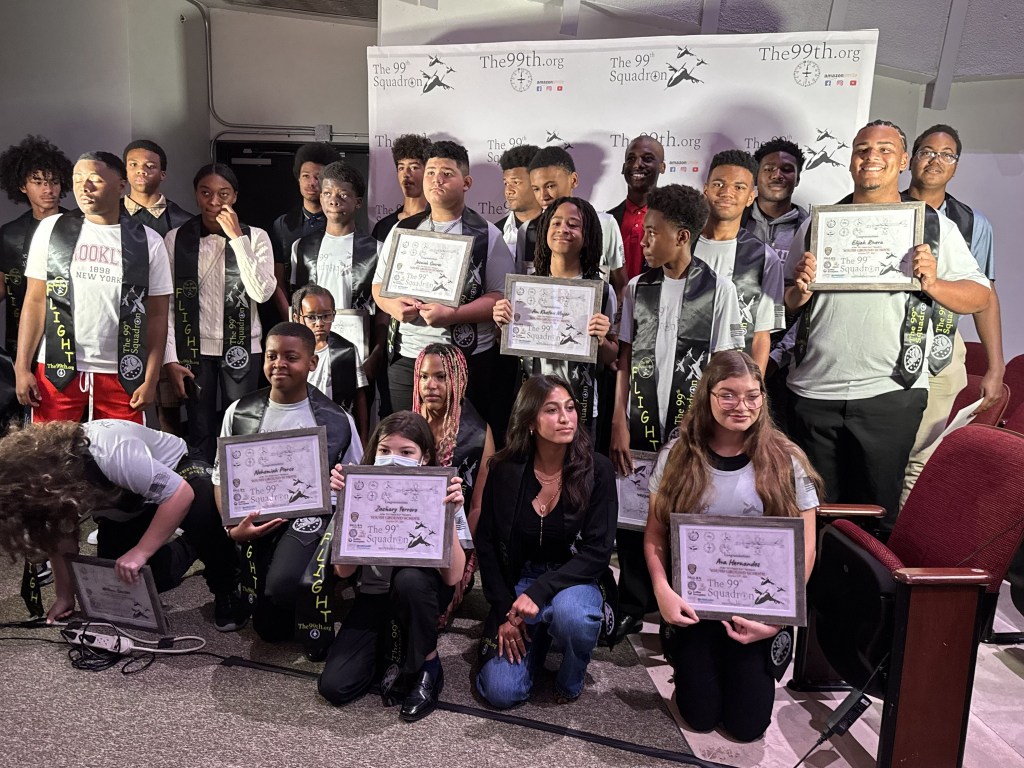
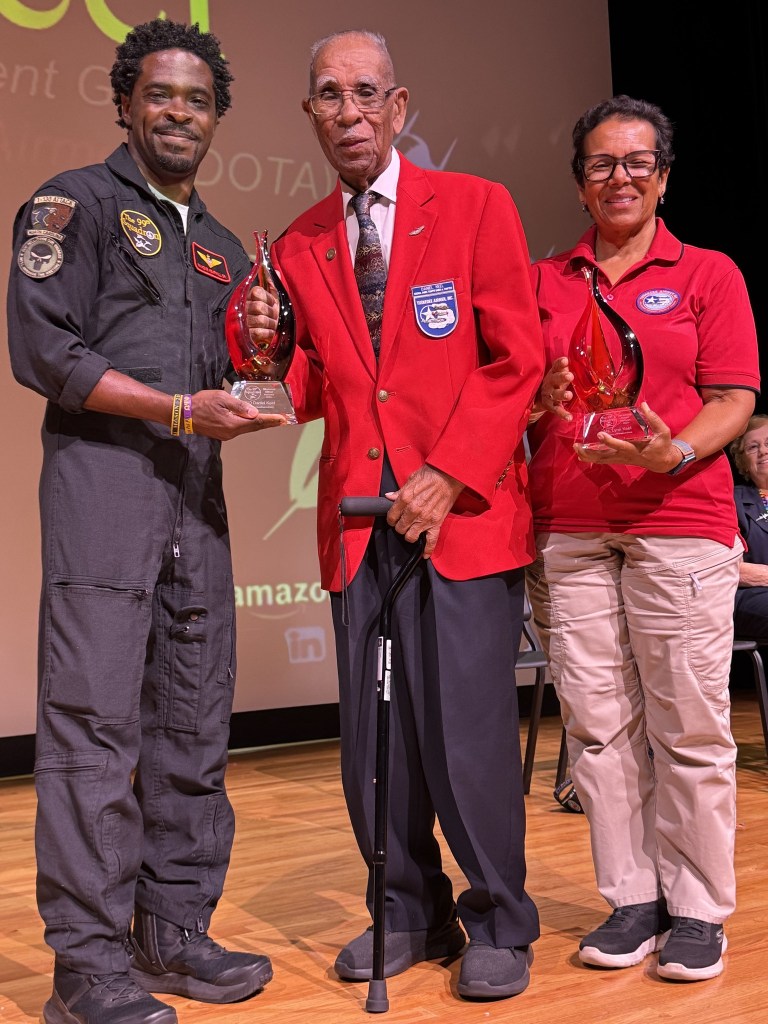
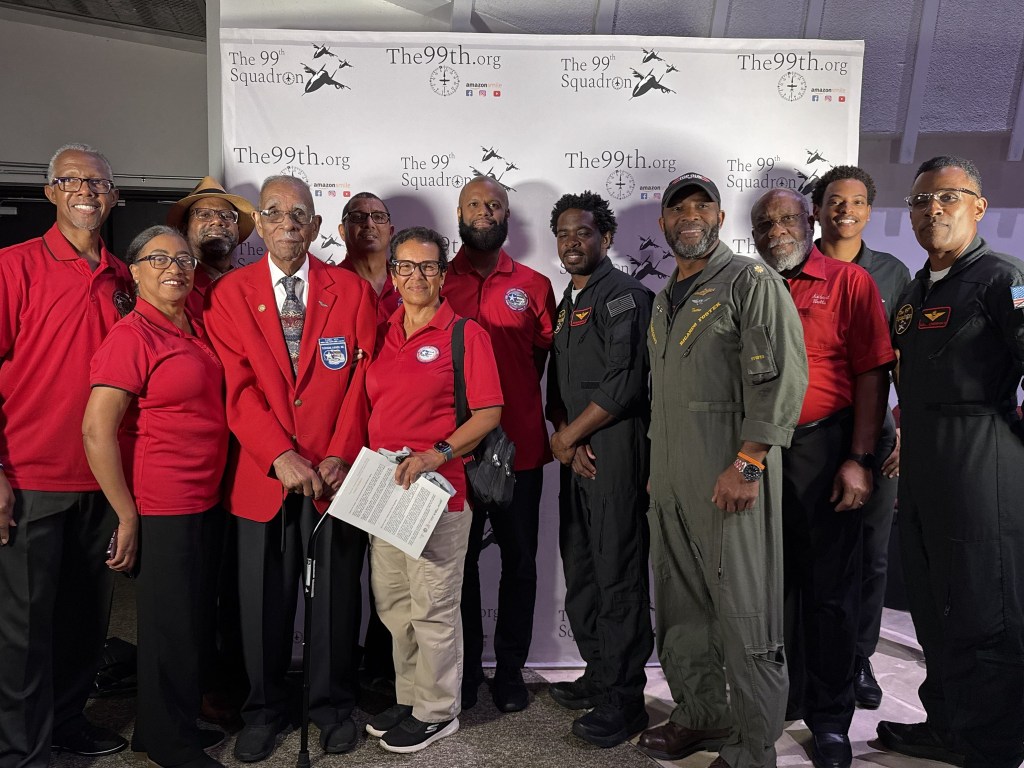
Recently, I was given the honor of addressing the commencement of the 99th Squadron, a group of 11 kids graduating from its youth ground school; kids who will go on to make a difference the aviation/aerospace industry simply by their presence. The commencement honored Flight Officer Daniel Keel, who at 102, is a veteran of Tuskegee Airmen, 477th Bombardment Group (45-G-TE), who was guest of honor.
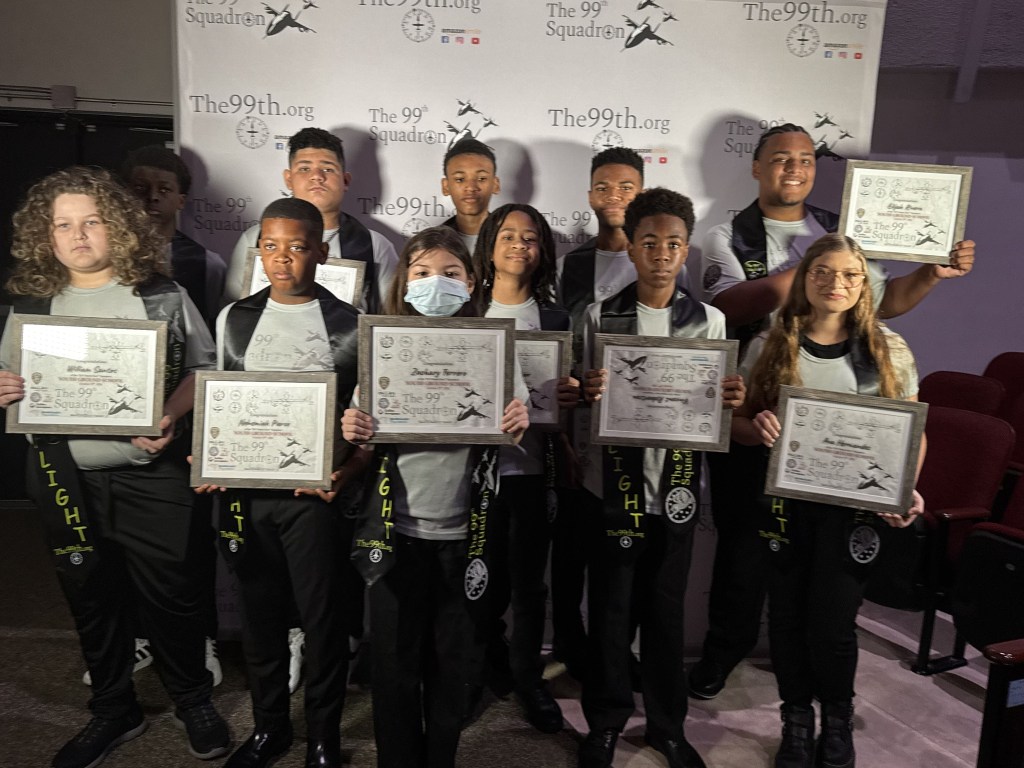
It was the fifth cohort to for the youth ground school program at the 99th Squadron which has touched the lives of 42 since lauching in 2020.
As we recover from the national election, I thought my commencement message should be spread beyond my small community here on the Space Coast of Florida.
That message is DEI will not fail simply because demographics and society are on our side and the workforce is where we will make a difference.
As I looked out on the small class, a miniscule drop in a vast ocean of what must be accomplished, it gave me hope for the future because I know it will have a mighty impact. This class, and others like it, is the leading edge of change that has long been overdue in this industry.
I’ve become an expert on workforce issues in the last decade, having reported on the workforce shortages and the challenges for corporate America why we have failed to populate our companies and production lines after 30 years of investment and trying. I’ve also covered the shift from college to trade schools and the changes to higher education demanded by industry. Finally, there is the impact of millennials, Gen Z and, now, Alpha, in the workplace and the shift to a more inclusive industry. We are decidedly not there yet but these young people will be part of it.
The generations that came along since the millennials get a bad rap for what they don’t know about how to be on the job but I don’t buy it. What I hear from employers about the lack of discipline in Gen Z and beyond, I see as their failure in training. I see what I call “Millennials +” as forcing change – changes to the work rules, changes in diversity, changes in society – that we have long needed, and which have been beyond our grasp since I entered the workforce.
At the commencement, I spoke about navigating a future that has become oh so much more controversial than it was even a decade ago. I also played the race card – talking about diversity, equity and inclusion as it should be discussed because I expect it to shadow us for a long time.
Many Hands
99th Squadron is not alone in its efforts to diversify aviation and offer opportunities to folks who don’t think about piloting or other STEM careers. The many, many programs that aim to change our culture is what excites me about the future. Former American CEO Doug Parker formed Breaking Down Barriers in Dallas to engage with underrepresented communities to let them explore aviation opportunities. Students must pay any help they get forward by going back into their schools and community to help others to follow a path to aviation. Among the many similar organizations are Avion Aerostar Institute in Chicago and Infinity Aero Club in Tampa. There is also Fly for the Culture, Fly Compton, Tuskegee Next and Tuskegee University’s new aviation program, the Organization of Black Aerospace Professionals and Black Pilots of America, who are leading the charge. Don’t forget Sisters of the Skies and Female Aviators Sticking Together among the many organizations representing women.
These organizations and many others are not waiting for government because we now it is too dysfunctional. They have their own agency which keeps them focused on their mission of providing opportunities for underrepresented youth.
In short, their young charges are part of a movement just as it is a movement for women and minorities at the dawn of Affirmative Action. But because we are tilting at an entrenched culture, we must have a toolkit to help us fight the good fight.
The Culture
The Congressionally mandated Women in Aviation Advisory Board cited culture as the number one problem for attracting and retaining women in aviation. And, if it true for women, it is also true for other minorities because it is the same culture.
I came to this speech after 40 years as an aviation journalist at the leading edge of the massive influx of women in the workforce. So, my reflections are the experience of a woman who faced the same culture these young people do, a culture of white male dominance. It is sad, but true, that dominance now how power. If you have an appreciation for history, you know the story line that women were given the vote, that women were given their place in the workforce, management ranks and the C-Suite.
And here’s my first lesson.
We were not given anything. We earned it.
Programs such as the 99th Squadron only revealed the possibility of a future these youngsters may not have otherwise thought of. When they took that first step with the squadron, they earned their place in aviation. And they’ll keep on earning it with every rung up the ladder.
Talking Nasty
My speech also covered the nasty neanderthals I’ve met along the way – the ones who shout, argue, put people down and fight for the status quo. A lot of them are pilots. Know this, I told graduates, they are small, pathetic, insecure little people who don’t have any confidence they deserve to be where they are, and they’ll try to take it out on you. In fact, their actions actually constitute a huge threat to improving aviation safety because they reject the basic tenants of crew resource management.
Yes, this isn’t some feel-good movement. This is about aviation safety. Full stop.
I’ve faced a lot of them in my career and, of course, my first reaction was, what is wrong with me. It – whatever it was – was my fault. But if we remember they are tiny, pathetic and insecure it will help us know that it’s them not us. That’s important to know. When we face such adversity, question everything. Is it them not you? If there is truth in what they say, learn from it. If not, know you will follow your own path…and succeed. There’s a lot of grit to be gained from adversity.
Diversity
Here’s what we need to know today, right now. Diversity and inclusion are important to nearly 80% of Americans. You cannot turn back that tide.
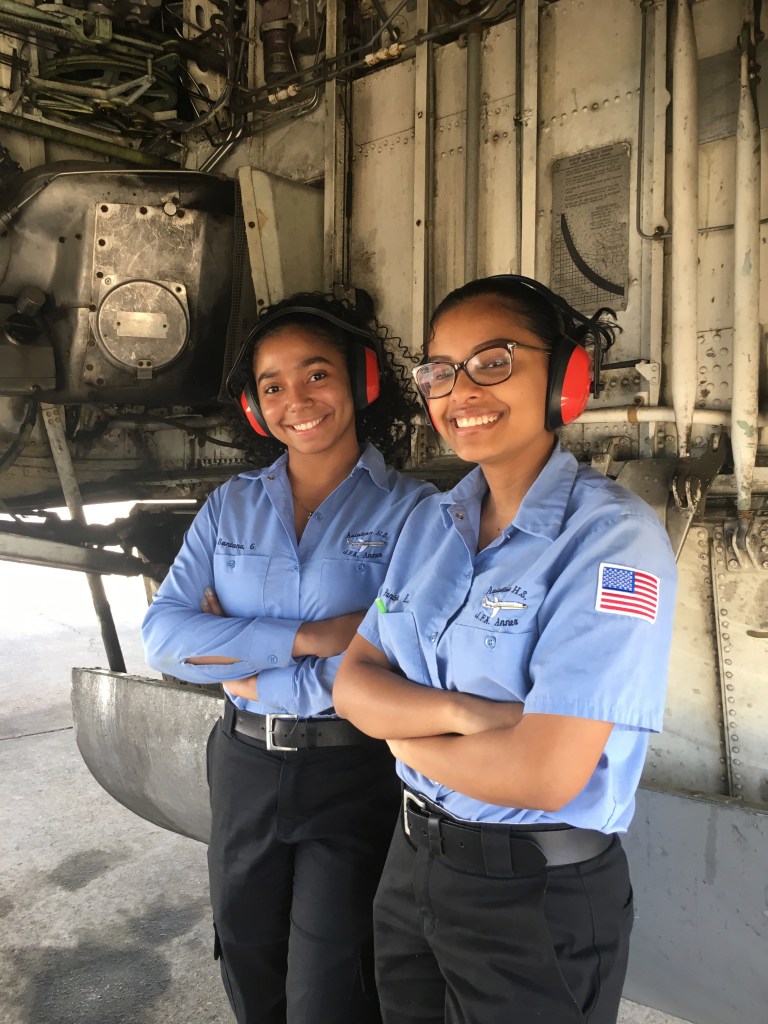
You know the stats. About 6% of pilots are women. Blacks make up, what 3.4%? The record is more dismal of AMTs. As for the C-Suite, women only account for 15% but what is it if you don’t count the female ghettos of human resources and public/government/communications relations?
But really it is not just about pilots. It’s about the entire aviation/aerospace workforce whether they sit in front of a computer or behind a wrench.
Giving DEI a Bad Name
DEI has been recast as bad by those who want to keep the status quo in the name of “fairness” to be judged on their “merit.” They think Affirmative Action is unfair and got the Supreme Court to agree. Never mind the unfairness of the last 500 years. That doesn’t count to them.
I reject the rebranding of DEI as bad, out of hand and proudly use diversity, equity and inclusion when discussing changing the culture and the workplace. The mission does not need rebranding, as HR professionals suggest as they pull back from their promises to the Black Lives Matter movement, to satisfy a tiny fraction of people who think Affirmative Action is unfair.
You must also know, right now, today, the fact remains study after study shows diversity – reflecting society in your workforce and culture – is key to company success. Selfishly, at the very least, it is for our own good. Socially, it is the right thing to do.
So, turn that argument about fairness from those who oppose Affirmative Action on its head and you’ll understand how laughable it really is. People who fight diversity are saying they don’t want their company or country to succeed.
When I see pushback on DEI, I double down. I challenge opponents to really describe how unfair affirmative action is. They won’t or, as I suspect, they can’t. If they really wanted to talk about fairness and merit, they would be fighting tooth and nail for equal opportunity. Only when we have equal opportunity can they be judged on merit. Otherwise, they are just continuing to ride on the advantages of being white and male. That’s not being judged on merit at all. This is not a zero-sum game. Affording equal opportunity does not mean someone else loses. It means we will get better, lead more enriched lives, and be more successful.
We are not asking for special treatment. Special treatment is, in fact, counterproductive for the cause. We are asking for equal treatment and there is nothing wrong with that because that’s what those who oppose us say they want. Well, let’s give it to them by demanding equal opportunity.
Demographics Are in Our Favor

Here’s where demographics come in. The reality is that we do not have enough white males to go around anymore and we cannot automate our way through our workforce shortages. We MUST widen the aperture of our pipeline to include those who never thought of aviation as a career option if they thought about aviation at all. Otherwise, this industry will fail. This was my second lesson.
These young people are critically important to the success of aviation and aerospace.
The pilot shortage coupled with the pandemic taught us one thing. Airlines cannot grow without a workforce to support its operations whether that workforce is on the flight deck, the maintenance bay or the C-Suite. So, increasing the pilot population is critical to the growth of the industry and those who don’t want to see change don’t want to see their companies or our country succeed. Simple as that. That’s the big picture.
Without these young people, and those like them, we fail.
Luxury of a Well-Lived Career
I post a lot on LinkedIn and I hope you’ll follow me because I have the luxury to say what others can’t. For my readers, I call it lurk and learn. A lot my posts are on aviation’s culture and building the aviation/aerospace workforce and I must be doing something right because I’ve organically a following of thousands and I constantly get notifications say my posts reach in the tens of thousands. I started by fighting the 1500-hour rule which was specifically designed to create a pilot shortage and was, in fact, counterproductive to safety but that’s another story. I’d get a lot of pilots attacking me because I was challenging the union line.
But they were shooting the messenger because I was using arguments against the rule put forth by the National Transportation Safety Board, the Flight Safety Foundation, the Royal Aeronautical Society and indeed other senior pilots who knew the 1500-hour rule was specifically to cause a pilot shortage. In other words, I did my homework, and I did not listen to unions or airlines because I was suspicious of their agendas.
So, when I was attacked personally, I knew they didn’t really care about safety, and I said so. When they refused to engage intellectually, argue on the merits of the issue, I developed a comeback that has helped me navigate this world because our society and our politics.
“I know I’m dealing with a towering intellect when all you can do is personally attack me rather than debating me on the facts.” I’ve found it pretty useful. It shut a lot of them up, but it converted a lot more because they actually cared about aviation safety and realized they were listening to safety experts through my loudspeaker.

Perhaps you are not at a place where you can actually say it out loud, but even if you only say it to yourself it helps to put their comments into context with reality.
Aviation/Aerospace: A Great Career on the Cusp of Being Made Better
As I said, these young people are the hope for the future. With them, and their Millennial + counterparts, they will be pushing the boundaries of workforce policies to recognize workers are not cogs in a wheel but humans whose personal life success must equal that of what they contribute to a company. They will be forming a much healthier work-life environment.
I ended my speech with concrete advice on the road to success including the importance of networking and the fact they are already full-fledged members of the aviation industry by taking that first step to take their wings. I also discussed building bridges within the company and finding allies who are not afraid to speak out at neanderthal comments because they know it hurts the team. Thank you for that, Lane Wallace.
I spoke about the importance of paying it forward and, politics aside, the worst thing that has happened to society in my lifetime is the Me Generation. Never let it be all about you, I told them. It’s not how I was raised but is how society is now. As you rise through your career and in life, take every opportunity to reach back and bring someone else along. All you need is the Golden Rule.
Don’t let them isolate you, I told them. When something happens, companies and societies turn it on you – blame you, say you are the only one experiencing whatever it is. Find your tribe and examine what is happening to you within that context. Those who would stop us, start by isolating us, gaslighting us into questioning our beliefs. A tribe will help us find the truth and what it means to our circumstances.
And, I told them to have a plan B because they will have at least four furlough-inducing events during their piloting career – once a decade before 2000. Since 2000 we’ve had four – dot.com bust, 9/11, Great Recession and Covid. What’s your plan B, I asked.
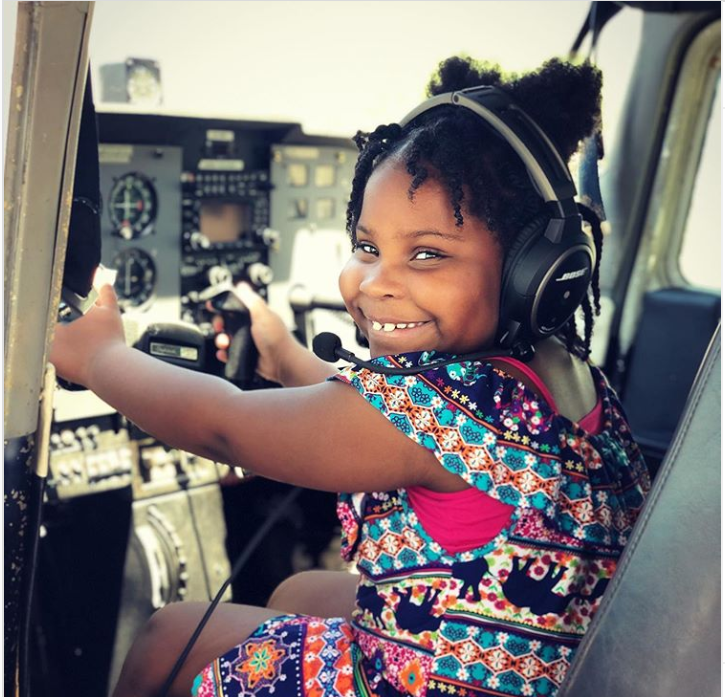
So, what if you wash out. What if you lose your medical? There’s a lot beyond your control and the system is corrupt. Commercial piloting is not for everyone. My criticism of flight schools is they just let you go instead of walking you across the field and introducing you to their network of flight dispatchers, air traffic controllers or other professions. If they won’t do it, I said, you walk across the field and explore other aviation careers. Even if you start as a gate agent or ramp rat you can rise through the ranks. Just know whatever you do, there’s a place for you in aviation and thousands of careers.
I concluded with the two inspirations that have guided me my entire life.
First: You learn more from those who challenge you than all those who pat you on the back combined. Don’t take it personally. Examine it for truth. Learn from it. Evolve and be better.
I’ve faced some tough times in my career and, if I’ve learned anything, it is this:
When you have come to the edge of all the light you know and are about to step off into the darkness of the unknown, know one of two things will happen. There will be something solid on which to stand…or you will be taught to fly. — O.R. Melling, The Summer King.
I’ve earned my metaphorical wings and so will that.


