By Kathryn B. Creedy Special to the National Coalition for Aviation & Space Education
With over 100 educators and aviation professionals tuning in nationwide, FAA opened its 2026-27 school season with an open forum to introduce educators to some of the best programming available to connect students to aviation and aerospace careers.
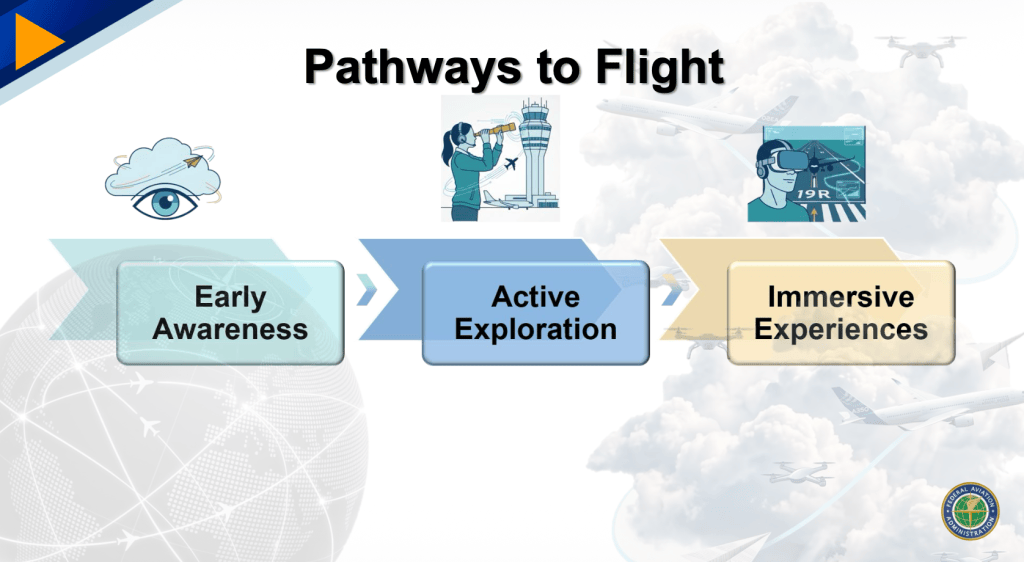
In addition to describing the FAA’s three new educator pathway programs (see related article) – Adopt A School, Aerospace Workforce Educators Program, professional development for educators, and the Airport Design Challenge – the agency introduced NASA, Organization of Black Aerospace Professionals (OBAP), Academy of Model Aeronautics (AMA) and Aviation Start, all five are major contributors to aviation and aerospace education which offer programs for STEM educators, kids, career exploration, model/drone kits and more than $20 million in scholarships.
The agency posted the Open Forum on You Tube for those who missed it.
Educator Programming & Kits
FAA and NASA produce some of the best educator programming connecting students to aviation and aerospace professionals including connections with astronauts on the International Space Station, according to Workforce Development and STEM Integration Lead for NASA Aeronautics Research Mission Directorate April Lanotte.
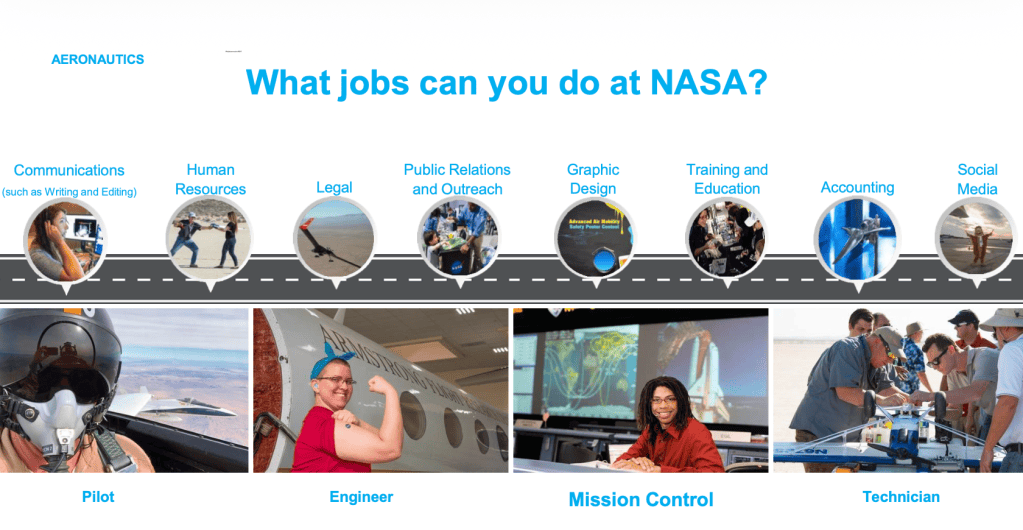
Providing futuristic career opportunities like returning to the moon, inspiring educators and kids alike, Lanotte stressed the first “A” in NASA – Aeronautics – explaining the mission directorate was focused on the future of aviation, including revolutionizing aerospace engineering methods, automating airspace and safety management capabilities, transforming airframes and propulsion and pioneering high-speed flight.
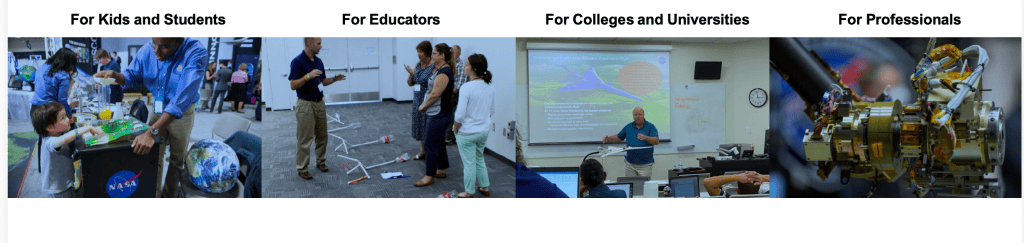
NASA organizes all its programming into a one-stop-shop for educators and students at NASA Learning Resources, a searchable database.
At the university level, NASA’s Aero Opportunities for University Faculty and Students lets them join the NASA research family and collaborate with peers to contribute to the evolving field of aeronautics. To that end it is seeking creative ideas/concepts relevant to NASA Aeronautics from interdisciplinary university faculty and student teams under three programs — The University Leadership Initiatives for faculty, as well as the University Student Research Collaborative and the Gateways to Blue Skies for students.
It’s Space Grant Program encompasses a network of universities, colleges, industry, non-profit organizations, museums, science centers and state and local agencies and funds student awards for those pursuing careers in STEM education, space law and other space-related fields.
Apprenticeships, Internships & Scholarships
Lanotte also discussed NASA’s internship programs which run during the fall, spring and summer seasons and includes educators working on a degree. Meanwhile the Apprenticeship Program matches experienced NASA personnel with those just coming into the industry to pass on their knowledge to the next generation.
NASA, OBAP, Aviation Start and the Academy of Model Aeronautics, discussed the millions in scholarship money available to help families fund student pathways regardless of whether they are pursuing professional certification, college or career training. OBAP also offers a video on its website on how to prepare and apply for its scholarships.
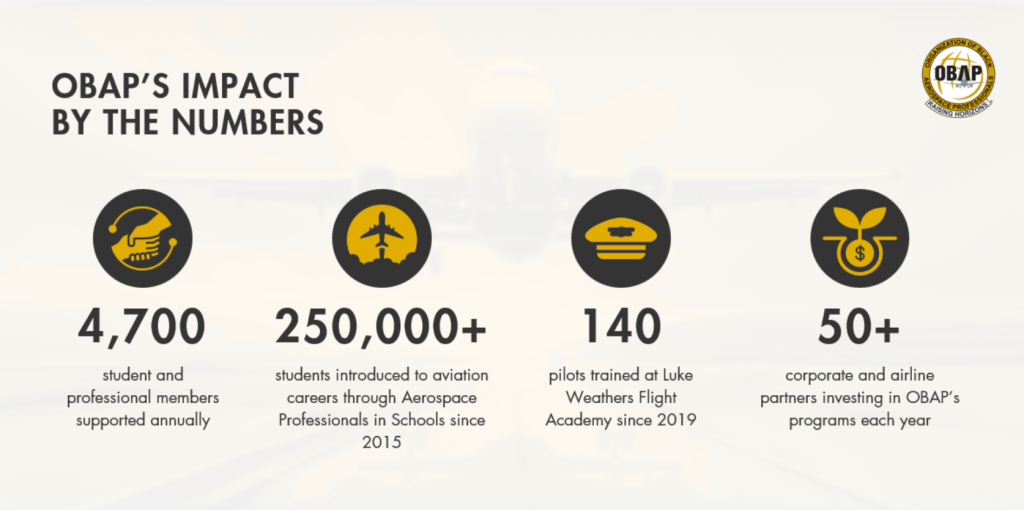
OBAP Scholarships are designed to overcome the financial barriers of pursuing aviation and aerospace careers. Funds can be used for flight and aviation maintenance training as well as advanced technical certifications, college or other aerospace career training. To date, OBAP has awarded over $8 million in scholarships to 600 recipients.
“There are over $20 million in scholarships from over 1,700 organizations,” said Aviation Start CEO Jamail Larkins, who reported more than 2,000 students use its database every month. “Aviation Start is the mentor most students don’t have. Through the Career Zone we connect students to professionals to avoid mistakes and to make the most out of their journey. It is designed to point every student to the right organization whether they want to fly for the military or business aviation or pursue a career in government.”
NASA launched a You Tube STEM Career Series in which each episode features a member of NASA’s workforce, their unique job and personal career journey. Students can dive deeper into a topic related to each episode with a NASA STEM hands-on activity provided in each video’s YouTube description.
Another great education asset not mentioned during the open forum is Scholarship Hacks – Insider tips for Winning College Money by Erika J. Barger. Many scholarships also cover trade schools and certifications such as avionics, flight dispatch and other professions which do not need a college degree.
Events, Kids Programming, Career Exploration
Also on You Tube is STEMonstrations designed as three-to-five-minute videos using the International Space Station’s (ISS) microgravity to demonstrate popular STEM topics. It also enables astronauts working on the ISS to connect to students throuhgh In-Flight STEM Downlinks .
NASA also has a STEM Challenge – the Annual Dream with Us Design Challenge – now open for applications for students aged 13-18 in which teams find innovative ways to respond to natural disasters using aviation. It offers supplemental STEM activities for K–12 and challenge support for educators so all ages can participate.
Resources include STEM in Español, Literacy and STEM, an Educator Facebook Page and Newsletter and Flight Log Experience building a flight log of upcoming X-plane flights.
There are also several publications catering to kids’ interested in aviation and aerospace including NASA’s ISS Magazine Upward. Let’s Go Aerospace! is being sponsored by local companies in schools around the country.
For event planners, NASA Engages provides connections between NASA workforce and STEM learners.
OBAP Youth Outreach and STEAM education
Using flight academies and its Aerospace Professionals in Schools (APIS), the Organization of Black Aerospace Professionals has powerful programs to explore aviation careers, learn to fly and other programs, Antonio Williams explained.
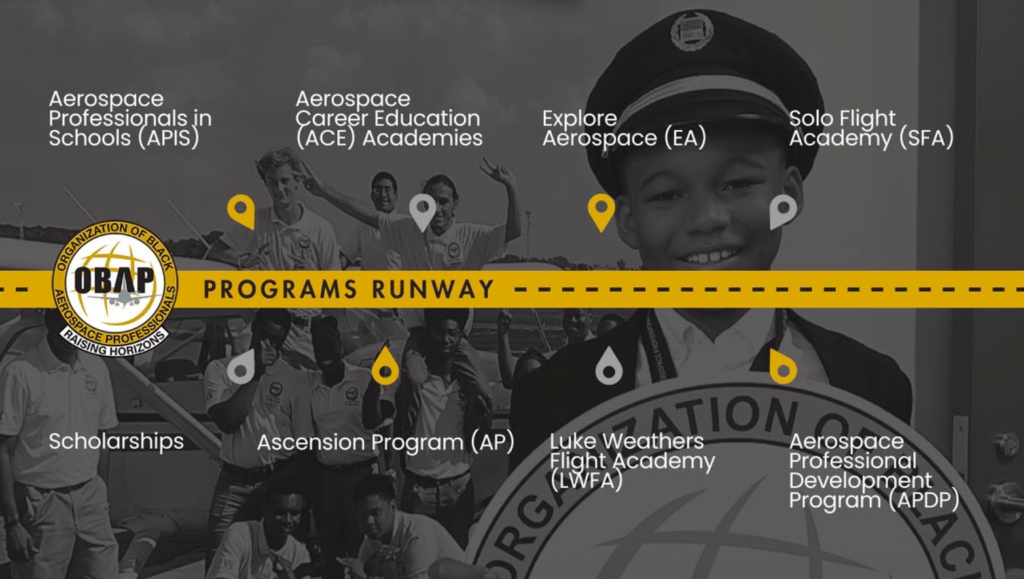
APIS brings pilots, engineers, maintenance technicians and other aerospace professionals into schools and communities to introduce K-12 students to aviation and aerospace careers. One of the most successful programs in aviation education, it has reached nearly 30,000 youngsters in schools and communities with in-person and virtual visits.
In partnership with FAA, it fields ACE Academies to give middle and high school students an immersive introduction to aerospace. The week-long academy, designed for kids 13-18 and often includes a Discovery Flight, teaches aerodynamics, airport operations and exposes kids to air traffic control, airport and other aerospace careers.
Designed for grades 6-12, OBAP’s Explore Aerospace program is a 12-week course providing a deeper understanding of how things work through interactive courses led by industry professionals who demonstrate space and rocket science, drones and uncrewed aircraft systems, as well as aviation maintenance.
Its Solo Flight Academy is an intensive two-week course for aspiring aviators aged 15-18 an introduction to flight training. Students combine 40 hours of ground instruction with up to 10 hours of flight training alongside FAA certified instructors. Held at the Luke Weathers Flight Academy in Olive Branch, MS, students who meet FAA, safety and instructor requirements, the experience may culminate in their first solo flight.
Operating year round, the Lt. Col Luke Weathers Jr Flight Academy offers flight training toward private pilot certification, instrument rating, commercial pilot certification, certified flight instructor certification and advanced rating and time building.
Model Aviation Education Resources
Academy of Model Aeronautics, the nation’s largest community-based organization for model aviation enthusiasts, offers several programs and the opportunity to join AMA Clubs located across the nation. It’s Model Aviation Student Club provides for grants and other benefits including a free membership for the educator who organizes it. It also offers model aircraft kits to teach basic aerodynamics and other STEM work and now offers a Know Before You Fly Discovery Drone Kit and education resources designed to teach you basic safety techniques as well as the limits allowed by Federal Aviation Regulations.
It’s UAS 4 STEM Drone Engineering Challenge helps students learn about drone careers while building, programming and flying an advanced drone.
AMA and OBAP are part of a nine-organization Aero Alliance who leverage their collective aviation and aerospace resources to inform and prepare the future aerospace workforce.
Aviation Start
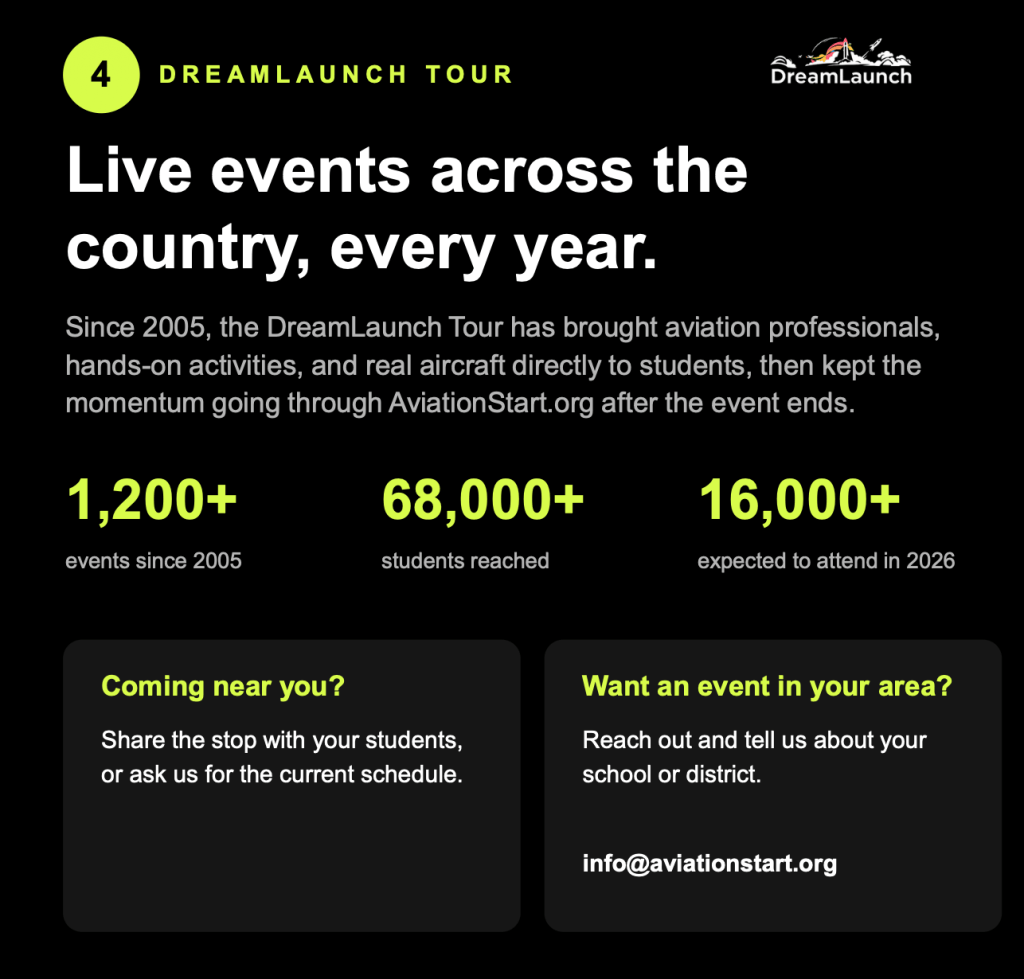
One of the largest programs in the nation, Aviation Start not only has its annual Dream Launch Tour events inspiring kids, it has a comprehensive scholarship database with an AI agent to help match you to scholarships. Equally important is the mentorship provided to avoid the common mistakes in pursuing and aviation/aerospace career and the shepherd students throughout their journey into their career.
During its 20+ years, it held 1200 live events, reached 68,000+ students and grown to 30,000+ users.