
An international movement gathers momentum to overhaul aviation training in favor of creating global standards, shedding prescriptive practices and devices and ending scattershot international regulatory standards.
By Kathryn B. Creedy
A decade ago, I called for pilot training reform in a series for Forbes Online, reform that ensured higher quality and better trained pilots. But I did not know what that would look like until, shortly thereafter, I covered a pilot training conference at the Royal Aeronautical Society and the World Airline Training Summit (WATS). They offered fetching glimpses of technologies, philosophies and processes to train pilots faster for greater competency and more leadership.

Since then, the WATS conference built on this knowledge as technology matured, updating us annually on its promise for improving pilot quality. But there was always an undercurrent of frustration questioning why, despite the evidence supporting what must be done to improve safety, it can’t be done. Politics was always the answer
“Pilot unions will never let it happen in America,” said one commenter at WATS 2024. “They have a stranglehold on that issue.”
But given the power behind the movement on display at WATS 2025, that may be changing as several major initiatives come together at once. Those forces include international efforts by the Aircraft Manufacturer Flight Training Association (AMFTA) and European Aircrew Training Policy Group (ATPG) as well as the National Flight Training Alliance and the FAA in the US, and promote Competency Based Training and Assessment (CBTA), citing the measurable improvement it drives.
WATS 2025 was a tidal change. With one voice, proponents called for an overhaul of training philosophy and regulations – using safety as the goal rather than mere compliance.
Indeed, there was an aura of impatience and restlessness delivering a not-so-subtle admonition to lead, move or get out of the way.
Outcome-Based Training
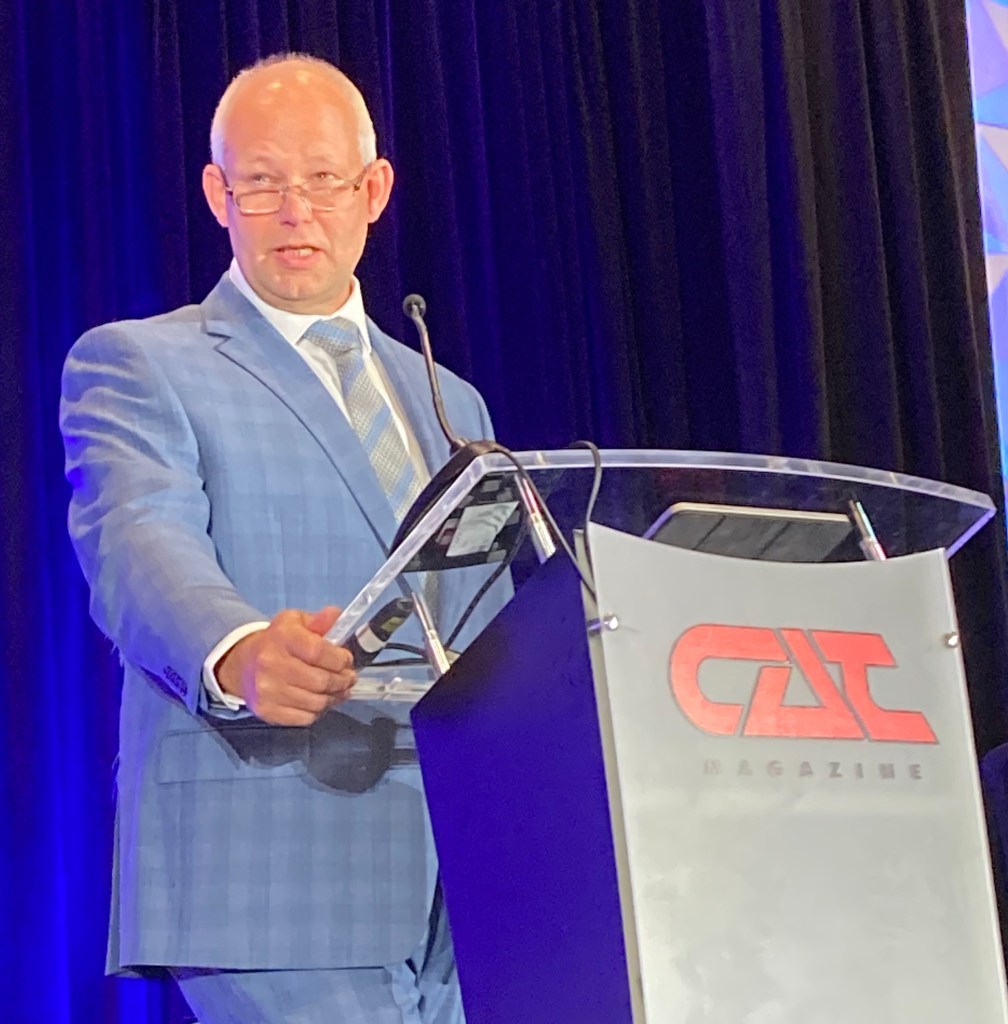
Keynoter Captain Philip Adrian, CEO at Multi Pilot Simulations (MPS) and the chair of the ATPG, set the pace for most of what followed during the three-day conference. He made the case for why we need an overhaul, while other speakers provided concrete examples of how it is working and its impact on quality and retention, covered in Part II.
Adrian called on attendees to initiate aviation’s own Moon Shot. Invoking the words of President John F. Kennedy, he took direct aim at the US 1500-hour rule echoing so many ALPA members. Even ALPA members tell me the rule was less about safety than creating a pilot shortage which would ultimately drive pilot pay up by 40% with the latest contracts. Well, mission accomplished, boys, and now let’s focus on safety.
Adrian defined the risk of ignoring the collective training wisdom on display at WATS 2025.
“We are currently fooling ourselves into thinking that training always equals learning, and that hours are a good indication of quality,” Adrian, echoing the National Transportation Safety Board conclusions a decade and a half ago. “The ease of auditing has brought us to a point where quality and safety are no longer the primary goal of training, but compliance is. Current regulations were new and modern several generations ago but are not fit for purpose in this modern age. Input driven regulations, specifying hours, devices and many other restrictions, provide industry with little to no flexibility. The ability to innovate with new tools is restricted.”
He’s not alone and, significantly, in the US, the National Flight Training Alliance is pushing for rules giving flight schools the flexibility and regulations they need. NFTA noted the only one not well represented in previous rounds of reform was the flight training industry.

“With this approach,” Adrian continued, “we are led to believe that safety is guaranteed through the hours in a logbook. The 1500-hour rule is an example of this. Let me be clear: I am not against this because it is too high, and I am not against it because it is too low. I am against it because it is absolutely meaningless! In the end, quality and safety is what we should be striving for, rather than hours or training provided. As I have stated before, regulatory or other issues should not stand in the way of achieving the best possible outcome, even if it is through completely different ways.”
With that, he called for outcome-based training based on global, rather than local standards that now rely more on prescriptive regulations than in building better, safer aviation personnel.
Not Invented Here
The move is controversial with opposition from unions in the US which have opposed both the Multi-Crew Pilot License (MPL) and Competency-Based Training and Assessment (CBTA), as bad despite its wide-spread adoption by the rest of the world. Proof of its value is the fact it is now making its way from the flight deck to cabin and maintenance bay. Many pilots say the reason for the opposition is because it wasn’t invented here.
So, the manufacturer and flight school community are teaming to urge change. Perhaps the combination of proponents will finally be able to break through union influence on Congress and actually make it a reality. To date, the wisdom of the National Transportation Safety Board and the findings of Flight Safety Foundation studies have not been enough, despite the fact they question an hours-based requirement and uncovered the fact unstructured flying to build hours costs the professionalism and discipline NTSB says is so important to aviation safety.
I’ve long argued ALPA’s obstinance is standing is the way of better training to produce higher quality, safer pilots. I expect the new movement to have an impact since it pushes a tougher, data-driven training program based on objective data not subjective opinions of flight instructors. Suddenly the union mantra that any changes “reduce standards,” becomes rather hollow in the face of such collective expertise in aviation training.
Adrian perhaps said it best. “The innovative change being sought by training professionals requires new thinking, new people and the need to come up with new solutions rather than repeating the old problems,” Adrian said. “Innovative solutions do not necessarily equal technology or technological innovations. A simple review of current regulations and training programs alike offer many improvement possibilities as a simple first step.”
The Players
Both industry and regulators are openly receptive to the challenge, none more so than the new partnership alliance of Boeing, Airbus, Comac and Embraer, designed to drive faster change to aviation training.

Embraer’s Head of Flight Crew Training and AMFTA Director Captain Alexandre Toribio, said the association has more credibility and a greater urgency because it is speaking with one voice to both airlines and regulators on establishing CBTA as the gold standard, something already done by Boeing and CAE.
Boeing Director Training Solutions Mark Albert agreed. “As manufacturers, we are responsible for innovation and advocacy for aviation training,” he said. “It makes sense in the cycle of ideation, airline by airline, national aviation authority by national aviation authority to unify the recommendations and documentation. We may be competitors but not when it comes to safety. It is our responsibility to identify the issues important for all of us and to work in harmonization on what works and move countries in the same direction.”
AMFTA’s efforts include making multi-crew cooperation a key part of pilot training before granting a type rating. Already underway from the organization are initiatives including CBTA guidance, instructor standardization, new grading policies and agreement on theoretical knowledge. Airbus Head of Flight Training Worldwide and AMFTA Director Captain Stéphan Labrucherie noted all the manufacturers are leveraging their strong relationships with IATA, ICAO and other regulators and using their collective knowledge to work with customers on improved training.
“What we can do,” said Comac Chief Engineer of Aircraft Operational Safety Jin Yibin, “is discuss our insights and recommendations openly, based on our common issues. With that we can approach the national authority and give them the entire picture of what manufacturers are concerned about.”
Pilot Quality Questioned

In the US, the spate of accidents at the beginning of 2025 brought the issue to the forefront, even as it politicized aviation safety by focusing mostly on air traffic control shortages and diversity, equity and inclusion. The midair between an army helicopter and a regional jet at Washington National Airport, killing 67, was followed in quick succession by two general aviation accidents capped off by the landing accident of an Endeavor Air regional jet in Toronto.
What senior pilots and other safety experts have been muttering over LinkedIn for years was suddenly in full view, prompting an urgency and concern the quality of pilots being delivered to the flight deck lacked the experience drilling holes in the sky was supposed to offer. They question first officer abilities and training but also the rapidity, forced by the pilot shortage, through which they rise from regional FO to mainline FO. One airline noted that a regional FO became a regional captain and was set to go to the majors within eight months, calling into question whether such fast-paced advancement was wise.
Meanwhile, political divides fostered a flight deck culture threatening crew resource management. In a landmark study for her PhD, Captain Kimberly Perkins revealed the importance of understanding the impact of bias in creating psychological safety on the flight deck as a critical element in reducing risk. She provided 1600 airline pilots with specialized training designed to enhance psychological safety and improve Crew Resource Management (CRM) and Threat and Error Management (TEM). They overwhelmingly agreed that psychological safety was crucial for enhancing safety, demonstrating a significant 260% increase in the number of pilots recognizing psychological safety as “extremely important” for aviation safety.
Need Data to Prove the Case

“While we have these conversations about pilot quality, much of it is second and third hand information,” said NFTA CEO Lee Collins, who was instrumental in forging the 1500-hour rule. “If there were stronger relations between airlines and regionals, we would have a better measuring stick to guide that change.”
The problem with that, however, is the fact that mainlines own most of the regionals, excepting two major players – SkyWest and Republic Airways – meaning the training relationships should be pretty tight. Instead, more reports indicate questionable activities at Delta, specifically that the pilot aboard the Endeavor aircraft at Toronto failed training as a Delta FO before being sent back as a captain; ironic since we are supposed to have a single level of safety. I questioned at the time, whether this was an actual failure or whether the pilot was never tested but sent back as a regional captain to avoid the requirements of the Pilot Records Database. The regional ownership component certainly calls into question whether major carriers take a wholistic approach to safety.
It is too soon to know, and we must await the conclusions of the NTSB and the Canadian Transportation Safety Board.
“These accidents present an opportunity for the safety boards to key up conversations based on data from the two crashes at Washington National and Toronto,” said Collins.
NFTA

The role of NFTA is important since it is taking the lead on modernizing training regulations by partnering with the FAA.
“NFTA’s mission is to provide direction and focus for the industry,” explained Collins, adding the timing was ripe with the need for requirements to accommodate powered lift and improved general aviation training. “Every sector had a voice in the pilot training debate except the flight training industry. Our role is advocacy for improvement. Our students have a certain way they want to learn, and training devices they want to use. That all embraces high technology, so we are reaching out to flight training providers and all businesses with a tangential relation to training to support changes. What is encouraging is the fact we received such a warm reception from both regulators and legislators who agree we need modernization. We need an infrastructure meeting the requirements of the flight training industry which needs flexibility as its number one requirement. We need to look at where industry is now and what we need for the future; to look at what’s going wrong and fix that. We need more part 61s to move to part 141. We need to alleviate the burden on Flight Standards District Offices and digitize oversight and a data-driven approach to flight training.”
Easier said than done, but Adrian implored attendees: “Let’s do the right thing, put safety ahead of everything else and devise a future where training is seen as an existential need rather than a cost of doing business,” he said. “Let’s not look at what was always done, but what NEEDS to be done to guarantee a better future. Let’s not look at easy and cheap, but right and needed! We need new ideas and people to carry them. We need to make aviation safer, better, more equitable, more inclusive, and future proof. Let’s show courage, step up and accept this challenge with our eyes wide open and set ourselves a target to overhaul aviation training before the end of this decade, not because it is easy, but because it is hard!”
 futureaviationaerospaceworkforce.com
One thought on “Analysis: Overhauling Aviation Training: The Global Push for New Standards — Part I”