
Sign up for a free subscription
By Kathryn B. Creedy
Representatives from Lockheed Martin and Textron, who began their careers as certificated airframe and powerplant technicians, explored the many careers that certification could lead to including manufacturing and engineering as they addressed the 200+ women gathered at the Inaugural Association for Women in Aviation Maintenance conference.
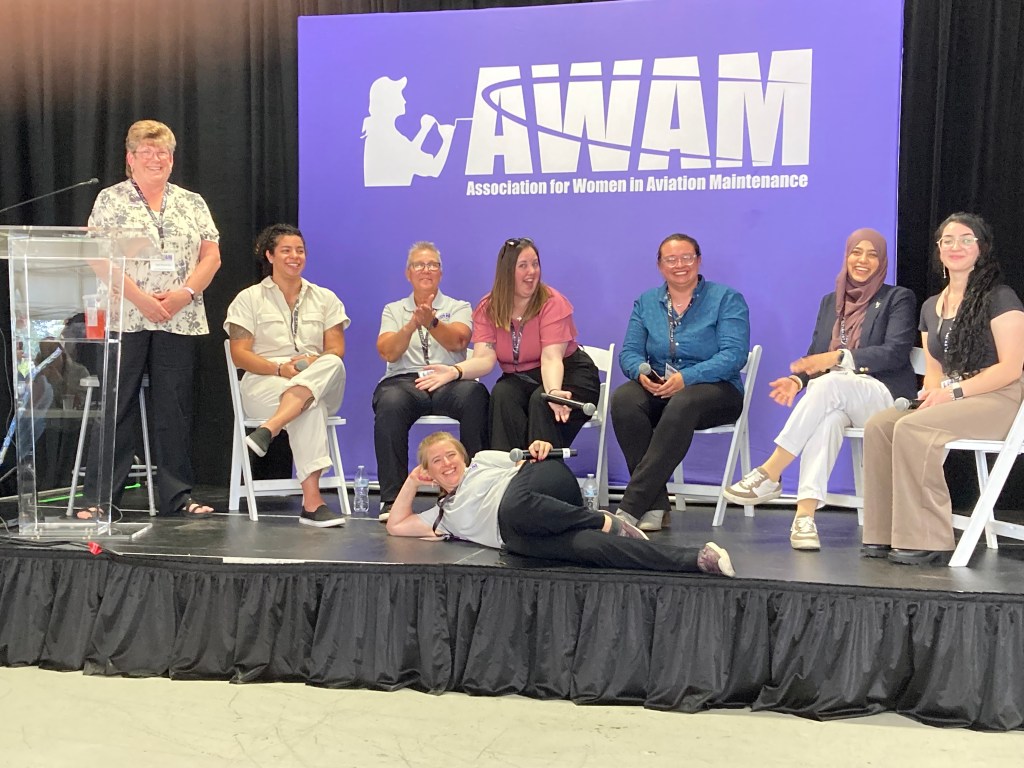
Joining them in describing their career progression and the many different paths that can be launched with an A&P and how to get there was moderator Dr. Gail Rouscher; Michelle Sanchez, who works in general aviation; Adeeba Ghazal, a veteran licensed aircraft engineer from Pakistan; Maria Vianco, a mobile maintenance business owner; Amanda Colon Buell from Textron; Kasey Dixon from Lockheed Martin; and Stacey Brown, general manager at FEAM. Panelists included apprentices, maintenance controllers, pilot/A&Ps, engineers and maintenance leaders and discussions were directed at both students and transitioning military as many began their careers in the military.
The Golden Ticket
Dixon spoke of her dream of becoming an engineer and leveraging her A&P license to go into manufacturing. “They are the folks building the airplane, who work through the problems that arise and coordinate with design engineers,” she explained. “They saw an A&P license as more valuable than a bachelor’s degree. It is so valuable, it is the Golden Ticket and can lead you into so many careers including technical support, manufacturing and customer experience. There are a lot of creative ways to use you’re A&P. Don’t be scared. Every cool thing I’ve ever done, I was terrified.”
Dixon extolled the opportunities of a career in aerospace and defense which is rarely discussed when it comes to workforce despite the fact there are acute manufacturing talent shortages.

“There are pros and cons for every sector of aviation,” she said. “I’ve loved the experiences I’ve gained in the far corners of the world. There is a lot of variety to the job, and the benefits include the fact the work schedule is more predictable. You have to understand what matters to you and what offers the opportunities for what matters.”
Sanchez reported she began at a startup. “It was just me and the director of maintenance in an old B-17 hangar,” she said. “We grew the business into an MRO. If you hop into a unique situation you can run with it, you can gain experience in a lot of areas you won’t otherwise be exposed to. Don’t keep your mouth shut when you have ideas.”
Brown started as a mechanic, but knew she wanted to take on leadership. “As an introvert, I knew I needed the skill speaking in front of people,” she said. “I took jobs in maintenance training which was the most hellish thing I could have done. I was the first female trainer, and they were not respectful of that. Thank God I had good mentors. Listening is a great skill. My job is to go to my supervisor and say what do you need from me today to make the job better. Always volunteer so when it comes time for promotions you are known. Always work to the next level which can do a lot for you. Having mentors and not being afraid to step out into something you are really uncomfortable with is really important.”
“I started as a technician,” said Ghazal of her 30-year career. “Now I’m a certifying engineer. When you have a vision of where you want to go, you can do it. Men wonder how relatable we are and think we can’t step into their shoes. They don’t know and understand our emotions are valid and sometimes we just need someone to talk to. We need to be there for others, and they need to know where to find us. If you are not surrounded by good people try to reach out to someone better, they will share their experience which can create wonderful ideas in our own lives. Don’t be scared. Calculate everything, examine the opportunity rationally and talk to your colleagues.”
Starting Your Own Business
Perhaps the scariest thing one can do in their career is to become a business owner, said Vianco, who will be opening an MRO next year, explaining New Mexico is a big state with very few shops. “I found a quote by Virgin CEO Richard Branson which has inspired me,” she said. “If anyone gives you an opportunity, take it, and then figure out how to do it later. In creating my mobile maintenance business, I took all the things I disagreed with at my previous jobs and turned it into the reason my business exists. I took all the things I perceived as scary and incorporated them. There are no bad vibes in my shop. There is no place for that in the world. I want my shop to be a comfortable place for anyone who comes through, including men. Was I scared? Yes, but I just did it.”
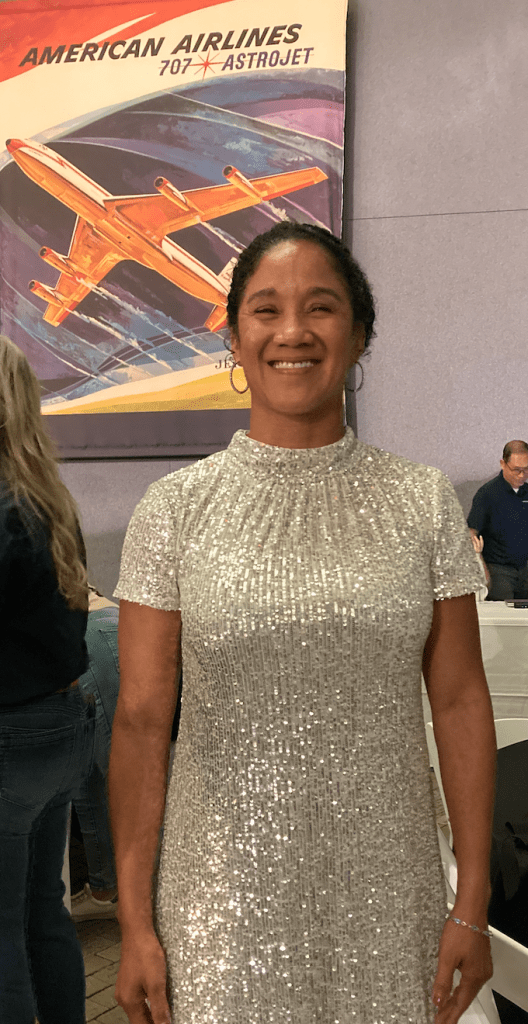
She then quoted Dixon who advised listeners to “do it scared.”
Buell agreed. “Fear is normal and common,” she said. “But lean into it because it means you care, and it will enable you to grow and learn. There will always be people around you to support you, who will help you and, with that, you will grow.”
Scholarship Applications
Advise from the panel applies equally to job hunting and applying for scholarships since many of the panel were scholarship winners, including Ghazal who said scholarships made her stand out. “Be an active applicant,” she said. “Be prepared. The main question is why you are applying and what it will mean to you. Be genuine and don’t be shy about telling them about your efforts, your challenges and how you made your way through them. You have to tell them.”
Vianco agreed. “When you ask for something tell them why you deserve it and what will use the experience on,” she said. “Pay attention to what they are asking for. Speak from the heart and tell them why it is important, why you need it. They’ll automatically knock you out if you don’t tick all the boxes. Read it over taking the role of a third person who does not know you. Have someone else read it and critique it.”
Dixon advised to include cover letters. “They are an opportunity to really show your passion and address any shortcomings,” she said. “It is so valuable to hear someone’s narrative in their own voice. Let your passion guide you and they will know who you are as an individual. Research shows, when women drop out of engineering school, they have a higher GPA than men who drop out. That affects the industry a lot and is one more reason to understand you are a better candidate than you think you are. You are maybe not perfectly qualified but do it anyway. It’s just persistence. Don’t be the person who filters yourself out. Let the hiring team to that.”
Research also shows that women do not apply for positions unless they meet 80%-90% of the requirements, while men apply even though they only tick 50% of the boxes.
The panel concluded with how each enjoys paying it forward by working with and helping young people pursue their careers.
“I’m working with young people coming into the industry and students who are very impressionable,” said Brown. “I help by coaching and mentoring them. It is so exciting to see them come out of school. They are so exciting to be there. I wouldn’t change anything because of the people I’m working with are the next generation.”
“When I found AWAM, that was my goal, to help people, to promote this wonderful cause,” said Ghazal.
Complete coverage of the Inaugural AWAM Conference is here:
I Love the Smell of a Pregnant Woman in the Morning
Analysis: Building An Equitable Workplace with the Help of Male Allies
 futureaviationaerospaceworkforce.com